In the collective portrait of the world's writers, Arundhati Roy stands out as a truly incandescent presence: her literature—infused with the spirit of protest that has fueled her entire journey—and her tireless activism have made her a beacon for those who seek in fiction not merely beauty, but also a spirit of dissent, critique, and protest. Since her 1997 debut with The God of Small Things—a Booker Prize winner translated into over forty languages and a cult classic—Arundhati Roy has remained constantly in the public and critical eye, even though she did not publish another work of fiction until twenty years later, in 2017, with The Ministry of Utmost Happiness, which was shortlisted for the Man Booker Prize and a finalist for the National Book Critics Circle Award. Her work as a leftist activist—including her support for the Palestinian cause, her solidarity with the Naxalites (editor's note: communist and Maoist groups in India), and her backing of political groups opposing government initiatives harmful to the environment and local communities—has kept her consistently in the public spotlight, particularly as she has faced harassment campaigns from detractors and even threats to her personal safety.
Throughout this time, she has written essays and an impressive body of non-fiction reflecting her political concerns and convictions: Power Politics (2001), The Algebra of Infinite Justice (2002), War Talk (2003), Public Power in the Age of Empire (2004), Field Notes on Democracy: Listening to Grasshoppers (2009), Broken Republic: Three Essays (2011), Capitalism: A Ghost Story (2014), Things That Can and Cannot Be Said (2016, with John Cusack), The Doctor and the Saint: Caste, Race, and Annihilation of Caste (2017), My Seditious Heart: Collected Non-Fiction (2019), and Azadi: Freedom. Fascism. Fiction (2020). She has made politically charged films and consistently spoken out—with conviction and passion—against abuses inflicted upon the most powerless, criticizing religious intolerance, violence by far-right groups in India, the persecution of minorities, and environmental destruction.
Refugiul meu, furtuna mea
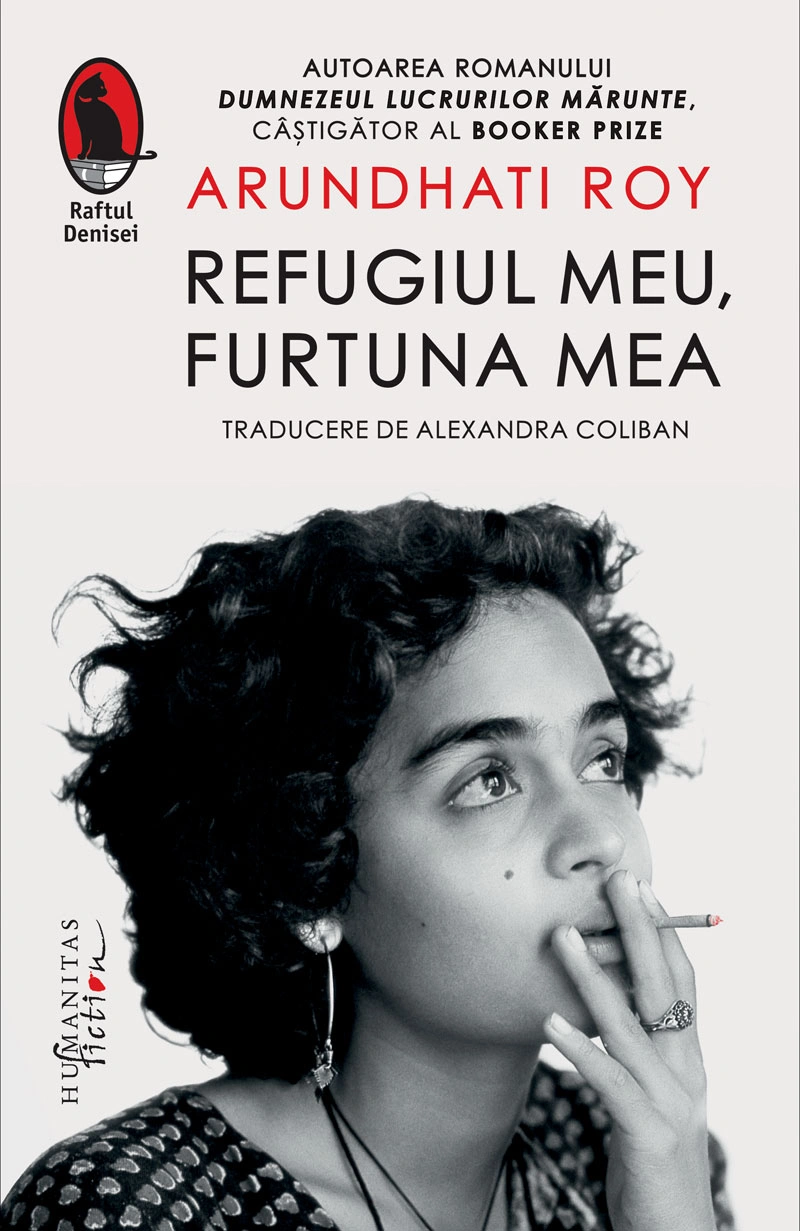
Last year saw the release of Mother Mary Comes to Me, translated into Romanian by Alexandra Coliban and published this year by Humanitas Fiction. Through clear, electrifying prose imbued with an urgent analytical spirit, the book documents the author’s journey—her intellectual development, significant connections, and artistic and political work—viewed through the prism of her relationship with her mother, Mary Roy. Mary Roy was a formidable figure: a feminist who won numerous legal battles in India and the founder of a school that became a benchmark for its educational model. Arundhati Roy wrote the book following her mother’s death—an endeavor as moving as it is powerful and honest—in an attempt to portray their complex relationship and the immense impact Mary Roy, her difficult and combative mother, had on her intellectual path. Mother Mary Comes to Me became a phenomenon in India, was nominated for prestigious international awards (such as the Kirkus Prize and the Women's Prize for Fiction), and won the National Book Critics Circle Award in the memoir category.
Arundhati Roy generously answered questions stemming from the core themes of this stirring autobiography. Her responses embody the same uncompromising nature, fervor, and passion found in every line she writes, regardless of the genre.
Scena9: Mother Mary Comes to Me was published in September 2025, exactly 3 years after your mother, Mary Roy, passed away. Did you plan writing a memoir while she was still alive or was it her death that prompted you to write it, and organize your life story around her figure?
Arundhati Roy: I never ever thought I would write this book. When she died I was shocked at my reaction, my grief—given the very difficult relationship that we shared. This is not really a biography of either my mother or myself. It’s the biography of our relationship—as told by me. Hence the title of the book. (In English). Its about two women who lived their lives not at home but in the world, and happened to be mother and daughter. And how the daughter, a writer, was formed by that relationship.
At the beginning of your memoir, you say it would have been equally difficult to write this book and not to write it. Can you talk about the particular challenges you faced while writing Mother Mary…?
My main challenge was to never fall for the idea that a story needs to be artificially ‘completed’ or a character needs to be ‘resolved’—to communicated the fractured, unresolvable person that was my mother Mary Roy. To share her genius, her rage, her eccentricity, her cruelty, her generosity, her gangsterism—with the world. I felt that a woman like her needs to be in the pages of literature and history.
Your political work, your grass root activism brought you public backlash; scourging criticism from your opponents and exposed you to high risks. How did you find so much courage to defend all the causes you embraced, given the costs you had to pay?
It would have cost me more to succumb to them. That’s just not in my DNA.
At some point, you say that because of your mother harsh attitude towards your brother, you developed a complicated relationship with feminism. Your mother was a very powerful feminist icon for so many, even though you and your brother came to know her difficult side, her frequent moments when she would throw a fit, her injustice towards you. How did that shape your relation with feminism and what kind of feminism do you embrace today?
Certainly not the kind of Feminism in which all women are victims and all men are perpetrators. For the most part it is true that woman have been the civilizational victims of male violence. But that violence is not just physical. It is cultural and psychological. And culturally and psychologically, women have also been enablers of patriarchy. This is not true of my mother of course. Her violence against my brother was a form of bullying—holding him responsible for the sins of all men, including her father, her husband and her brother. So for me, Feminism does not draw a neat lone between men and women. But I live and work and love in solidarity with everybody, of all genders who believes that all humans have the same rights.
You talk a lot about hindu supremacy, hindu fascism and the state violence against minorities in India. At the same time, we are watching a massive rise of the far right on a global level. Do you see a realistic possibility to counteract this terrible shift?
I don’t know if you have followed what has been happening of late with the Hindu Fascist government in India. After twelve relentless years, it is suddenly under attack from the young generation of students whose parents’ supported the fascists. It is fascinating to watch it unfold. Mr Modi, our Prime Minister, who has ruled with an iron fist, claiming to be ‘non-bioligical’ with a hotline to heaven, a man who has never ever addressed a press conference— has suddenly been exposed for the absolute fool that he is and always has been. He cannot open his mouth without being mocked with tens of thousands of hilarious memes by young folks on instagram. I think his days are numbered. But waiting around the corner is what is being called techno-fascism. A form a mind-control, mind-ownership and authoritarianism that we have never known. We have to counter it and uproot it now before it's too late.
In this memoir, you also discuss your relationship to language, to the language required by fiction. You compare it to a wild beast that needs to be tamed. How do you practice this taming of language for the use of fiction, do you have a personal recipe perfected in time? Does writing nonfiction help?
I practice it by living and breathing it. All the time, every minute of the day I think about how to put down in words the swirling chaos of my thoughts.
How was your memoir received in India? What kind of response prevailed?
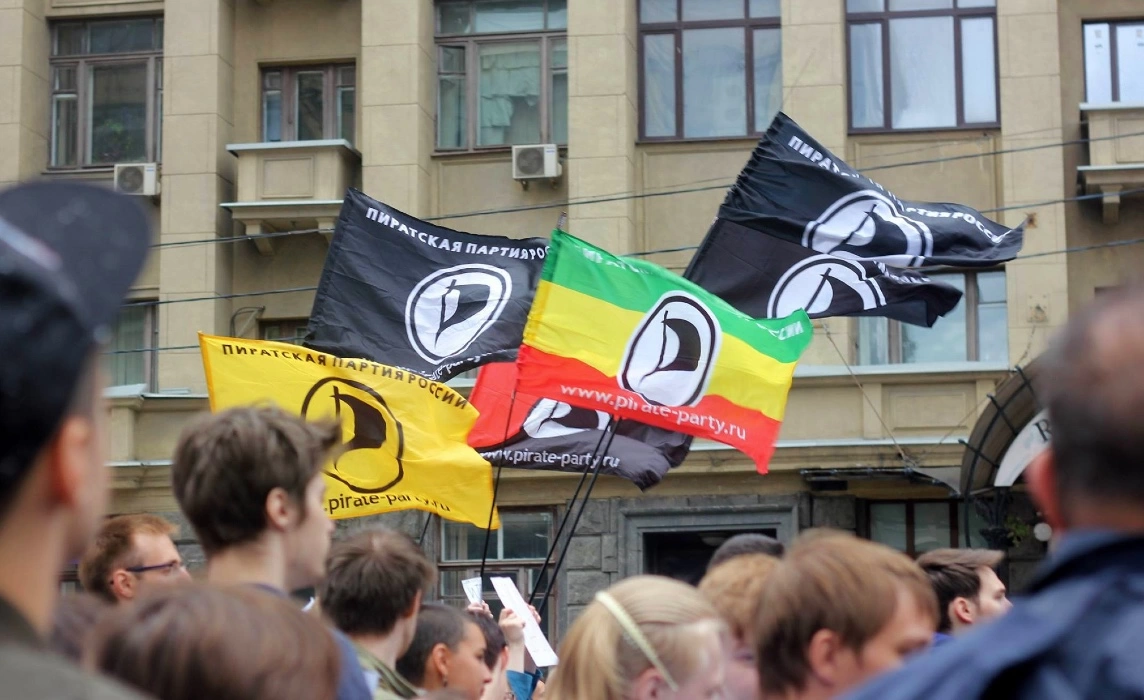
It was received with the kind of love that left me stunned. Esoecially by this young generation that I just spoke of. It ruled the best seller lists for months. It is the most pirated book on the streets —tens of thousands of copies are pirated.
Mother Mary Comes to Me is a story of rebellion, almost all the characters that appear in it are rebels, in a way or another: you, your mother, your brother, your long-time partner, Pradip, your comrades, be them Naxalites or activists fighting against some destructive Government initiative. Being a rebel is a hard choice. What do you think is the price that needs to be paid for living the life in one’s own terms and how would you describe the joy of choosing this path?
Actually I don’t think I chose it. It chose me. I had no options. I don’t see myself necessarily as a rebel. Just a writer who writes what’s on her mind. If I can’t do it in a straightforward way because its too dangerous, I find a roundabout way.
All your fights and all your stories, no matter how difficult, keep something luminous around them and you talk about them with a great generosity and sense of humour How did you manage to cultivate these qualities despite everything you’ve been through?
It’s because I live in a world that is simultaneously chilling, tragic and hilarious. I live it. I write it. I’d hate to be the kind of writer that only strikes a single note.
Have you ever felt you’ve been grappling with the idea of writing fiction, in a world that seems to be on the edge of self-destruction ((environmental crisis, wars everywhere, civic rights being erased, minorities persecuted and education massively devalued)? Why do you think fiction still matters, what is its superpower according to you?
I survived my childhood by thinking of people, including myself as characters in a story. I have written about nuclear bombs, war, big dams, irrigation, terrorist strikes, the ‘free’ market, torture, military occupations as though they are characters in a story too. Perhaps the only real Christian thing about me is the belief in that first line in the Bible—In the beginning was the Word. To me, language is thought. Without language, we cannot make sense of our world, we cannot warn of our impending extinction—as a race, as a planet. I’ll write until I end.