Far-right politicians tell them to go “home.” The European Union is also sending them back, but through centers in third countries outside the bloc. Meanwhile, in Romania and other EU countries, migrants from Asia (and beyond) struggle, often in vain, to work and live here legally. A young Indonesian who studied in Cluj wonders where and how they should actually “return.”
A shot of democracy
That night at La Țevi bar, I watched Romania’s presidential live count as if my future in the country were being decided. Mind you, I could not even vote there.
La Țevi in Cluj-Napoca was the kind of bar that was “so bad that it’s good,” at least to me and my good friend Andrei. There was a small terrace at the back where we watched the live count on a phone over cheap beers and cigarettes. It was dim, loud, a little ruined, and rock—the opposite of a polished European tourist bar. I wouldn’t send pictures of it to my mom to show her how her overseas son was living.
On another night, I would have loved it for exactly that.
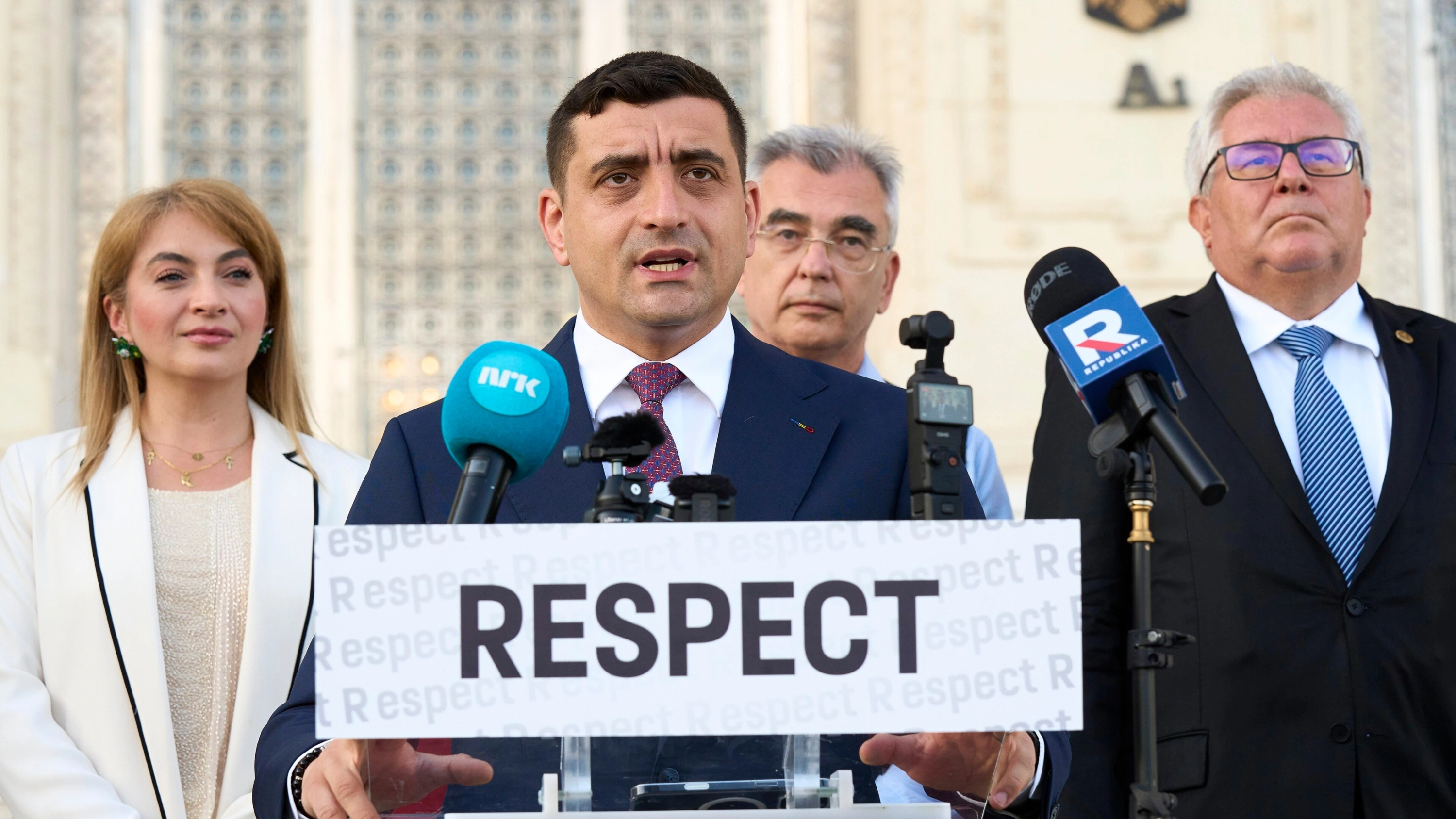
But George Simion, a hard-right Eurosceptic who styled his campaign in the language of Trump-era nationalism, was on the phone screen. Andrei and I were anxiously waiting to see whether this country would hand the presidency to the far right.
I was, and still am, Indonesian. Romania, to me, was not ancestral whatsoever. I had no village there, no family grave. I had arrived there four and a half years earlier to study. That did not make the election feel distant.
Simion talked about “illegal” migrants, borders, Muslims, and Europe losing itself. Those things were not exactly me, but not completely far from me either. I was legal, and my papers were in order. I was literally there because the Romanian state had paid me to be there.
At the same time, I was a brown-skinned Muslim foreigner with a non-EU Indonesian passport, sitting in a Cluj bar. It would be naive not to feel an ounce of anxiety when you’re in that position.
When it became clear Simion had lost, we took shots of Zorro.
A “Zorro” shot was spicy, pickle-y, and burned my stomach because of the Tabasco. Yuck. It sounds disgusting, I know, but I was happy swallowing it. Like, physically relieved. Still, it was ridiculous to feel that way about a country I could not vote in. Who was I, after all?
Well, I had spent almost half of my 20s in Romania. Some of the best times of my life happened there, and I met friends I knew would pick up the phone whenever I needed them. Whatever else the country had done to me, for better or worse, I think the Rafly sitting in that bar was better than the Rafly who had just recently left Jakarta.
That night, we called that devilish drink a “shot of democracy.”
Send them back where?
Over a year later, I called Rawee, a Thai friend from my first year in Cluj. After graduating in music, he had moved to Sebeș, an industrial town about 120 kilometers away.
At a birthday party there, he tried to greet an old friend like before.
“Hey, what are you doing?”
The guy barely gave him anything back.
Rawee and this friend had met through the same local circle in Sebeș, and for a while, things were normal. Then the friend became the president of a teenage volunteer group for AUR, Simion’s right-wing party.
“He seemed like he didn’t want to talk to me anymore,” Rawee said.
Then that friend started talking about foreign workers, about Nepalis, Sri Lankans, Indians, Thais, Indonesians, Bangladeshis, anyone from outside the EU. He claimed the government benefited foreign workers more than Romanians and paid companies to hire them. Rawee doubted that claim.
“Look at those foreigners, look at those Nepalis,” Rawee remembered him saying. “They make 5,000 lei per month.”
Rawee pushed back. He knew Nepali and Sri Lankan workers who started at 7 or 8 in the morning and continued until 9 at night, sometimes working Saturdays too, just to reach the salary his friend was calling privilege.
“They deserve more than 5,000 lei for that,” Rawee told me. “It is very hard work.”
The friend also complained that foreign workers got accommodation while some Romanians had nowhere to live. Rawee wanted to ask whether he had seen those rooms. Employers bringing in foreign workers had to house them, he said. That did not mean the housing was good.
Later, the friend smiled, mentioned a blood donation event, and said he would contact Rawee.
“He never talked to me after that day,” Rawee said. “So it was all bullshit.”
What Rawee had heard in Sebeș belonged to the same European mood I was watching back in Cluj. Across the continent, far-right and anti-immigration parties were turning different national frustrations into versions of the same story: the country was changing too much, too fast, and somebody foreign had done this to us.
On June 17, 2026, the European Parliament approved a deal on new return rules. The text still needed formal Council adoption and publication, but it would allow EU states to move some non-EU nationals with return decisions to “return hubs” in third countries outside the bloc.
But why “return,” though? A “return” suggests someone is going back to where they came from. The idea of a third-country hub made that lexical logic wobble. If a person is moved to a country they may have never lived in, what exactly are they returning to? I haven’t quite understood the logic behind this wording.
After the vote, right-wing MEPs began chanting, “Send them back! Send them back! Send them back! Send them back!”
But, send them back where? The chant made it sound like everyone had an obvious place to be returned to. Back where exactly? Back home, or just back out of sight?
The vote was about people staying illegally and already subject to return decisions. Technically, that was not me, Rawee, or other foreign students and workers with valid permits. We could wave our valid permise de ședere all day to show that we belonged there. Then again, that would not stop some racist from feeling bolder about telling us to go back, online or to our faces.
For foreigners like us, these politics came as: How long will my residence permit take? Do I have to provide a thicker bank account to renew it? Can I post on Facebook job-searching groups without being told to “go back to my country”? Can my friends from India, Sri Lanka, Vietnam, and the Philippines deliver food without getting harassed verbally and physically on the street?
On August 19, 2025, AUR deputy Dan Tănasă urged Romanians to refuse orders delivered by foreign workers. On August 26, just a few days after that, a Bangladeshi courier was punched in Bucharest by a man who called him an “invader” and wanted him to leave Romania.
These were separate incidents, but it does not take a rocket scientist to understand that politicians saying this in public makes it easier for ordinary people to say - and sometimes do - the same thing.
The blame still needed somewhere to land.
Of course, it’s the migrants
Who else?
Housing crisis? Blame it on migrants instead of landlords turning every spare room into an overpriced “zen studio,” and governments that have failed for years to make housing affordable. Saturated job market? Of course, migrants are “stealing our jobs,” never the companies asking fresh graduates to have three years of experience for an entry-level position while keeping wages low.
Europe is “losing itself”? It must be the migrants again.
The recent mass crossing into Ceuta made the map hard to ignore. Tens of thousands of people crossed from Morocco into a Spanish city sitting on the African mainland, and at least 72 died. Portugal took Ceuta by force in 1415. When Portugal restored its independence in 1640, Ceuta remained with the Spanish crown; the Treaty of Lisbon formalised that in 1668.
People in Ceuta can genuinely want to remain Spanish, just as people in the Falklands can genuinely want to remain British. That belonging is valid. But conquest can have centuries to become law, school, memory, and eventually home; it does not erase the colonial power trip that put Ceuta under European rule.
Romania knows what it means to leave, too. After Ceaușescu fell and the borders opened, Romanians began moving abroad in much larger numbers. For decades, many were exploited as cheap labour, stereotyped as criminals, subjected to racism and xenophobia, and told to “go home.”
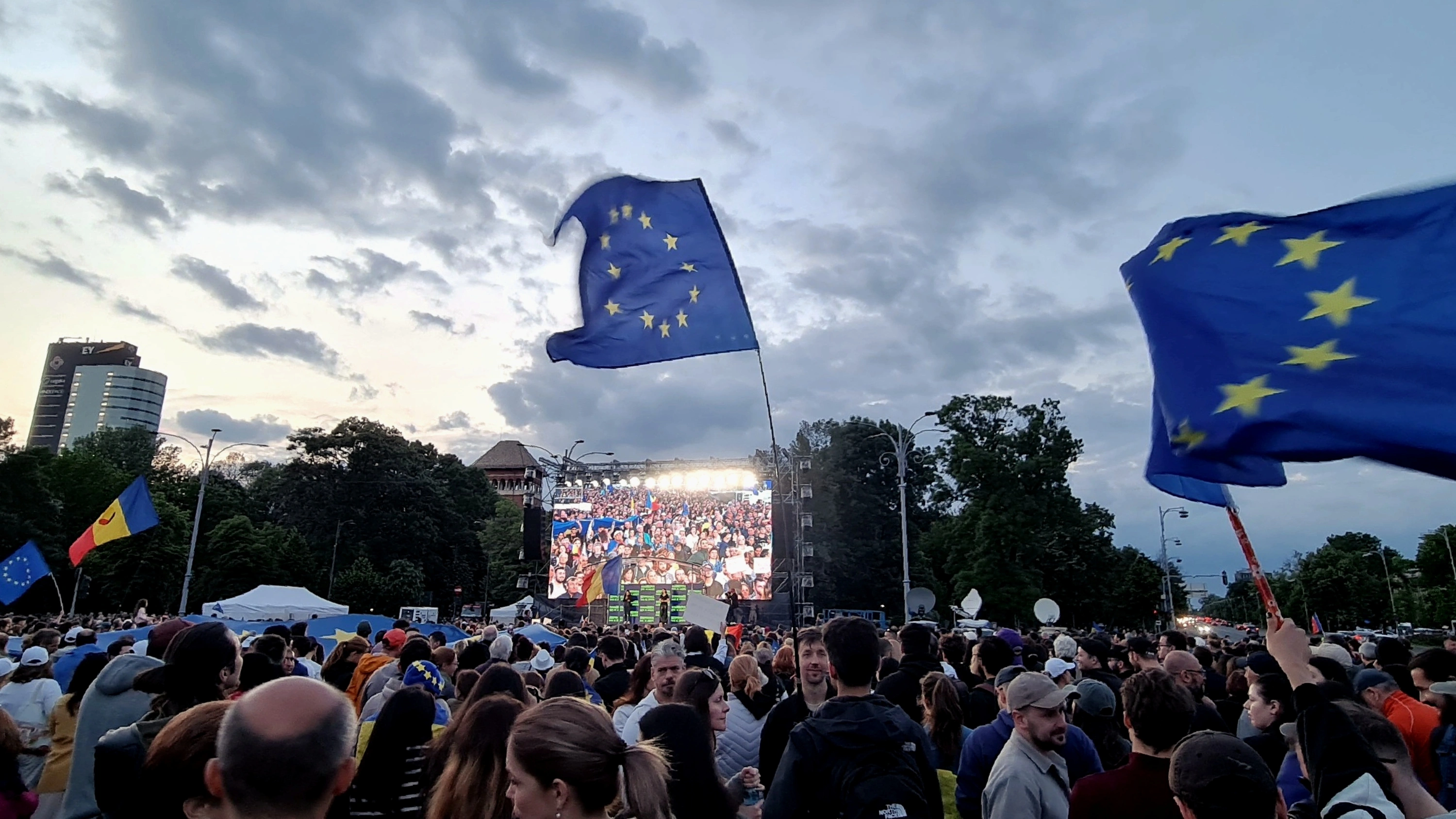
By 2024, three million Romanian citizens were living elsewhere in the EU. One Romanian I sat with had left Făgăraș for Italy as a teenager and eventually built a life in Jakarta, where he was applying to become Indonesian.
I cannot speak for every country. But for Indonesians, Europe had been arriving at our door long before we started arriving at theirs.
The Dutch ruled the archipelago, extracted from it, left, and then, when sovereignty was formally transferred in 1949, Indonesia was made to assume billions of guilders in Netherlands Indies debt. We paid most of the disputed debt before repudiating what remained in 1956. A separate financial settlement followed in 1966, with payments continuing until 2003.
Mind you, I was four years old by that time.
Now, Romania did not colonise Indonesia. The Balkans have their own histories of occupation, borders redrawn by other people, and larger powers pushing them around.
But European empires and businesses crossed our borders long before our students and workers crossed theirs. Poorer countries were useful as sources of labour, land, spices, minerals, markets, and whatever else somebody richer needed.
I had seen the same scapegoating at home.
When Indonesia’s economy collapsed in 1998, Chinese-Indonesians - mind you, they are Indonesians - were made into the face of that collapse after decades of state discrimination had prepared the resentment. Many were attacked and forced to flee.
The real causes of economic and social anxiety are often too expensive, too complicated, or too politically inconvenient to confront. It is easier to find a smaller group, point at them, and call that justice. Then a politician gets to promise that, once those people are gone, everything will somehow work again.
Meanwhile, Romania’s 2026 quota still allowed 90,000 new foreign workers, just 10,000 fewer than in each of the previous three years.
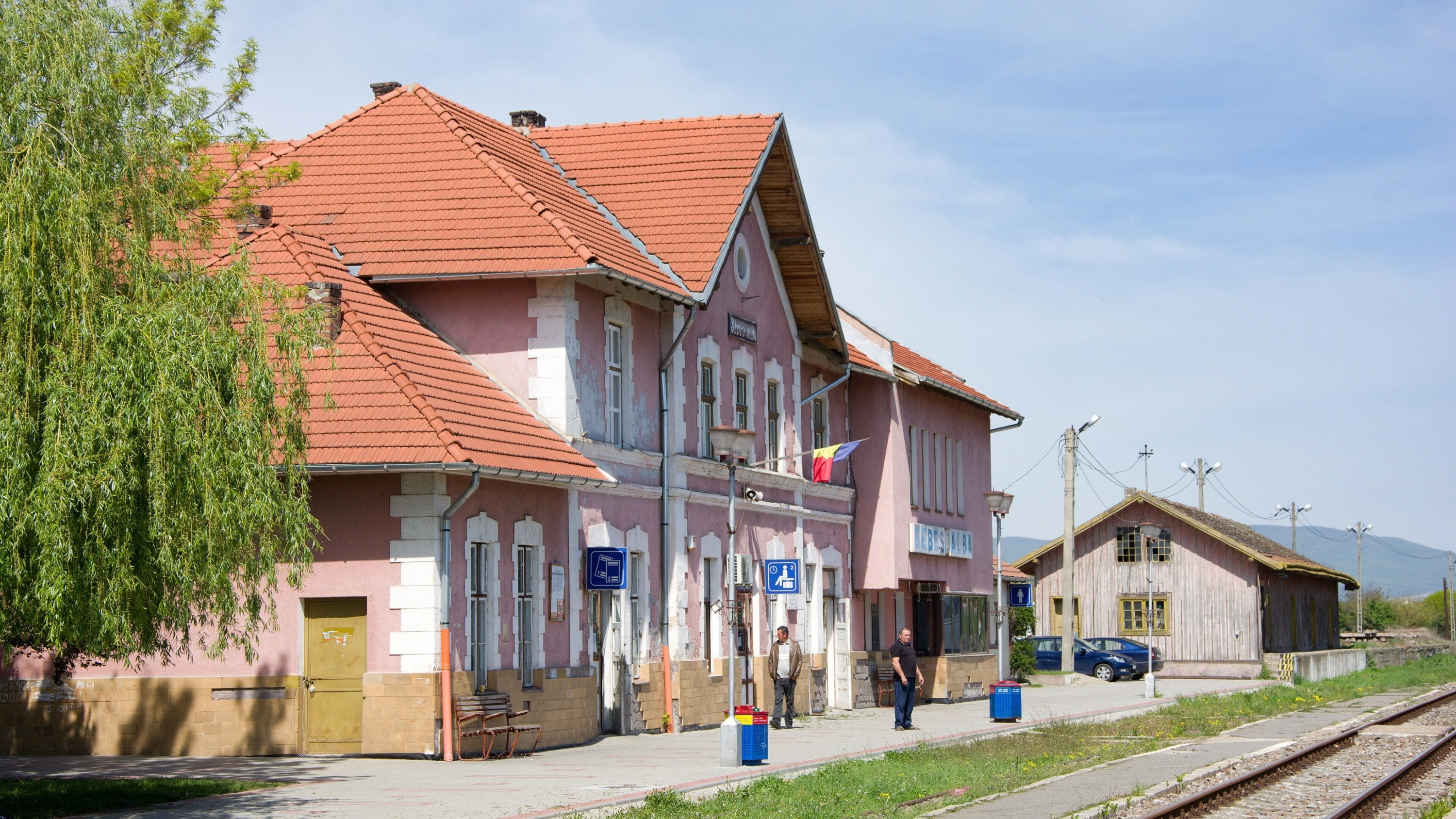
Rawee kept reminding me that it was one guy, not the whole country. He said that personally, he did not “feel” racism in Romania. He travelled by BlaBlaCar, talked to drivers, met parents and children in Alba and Sebeș, and felt mostly welcomed.
Some of those drivers openly said they did not like Indians, Africans, or Muslims from the Middle East. They softened when they realised he was Thai. Thailand meant beaches and nice people. Asian people, they also told him, were fine and hard workers, even though it is ironic considering that India is in Asia.
Rawee went to church with local friends for a while. My own head would not be filled with so many Romanian curse words if I had not integrated well too, too well, even.
Rawee and I had arrived through another government route: scholarships. After graduation, our study permits were no longer enough.
Nine months of borrowed time
For Rawee, Fred, and me, graduation started the clock.
In Romania, a graduate’s study residence can be extended for nine months to look for work, complete the hiring formalities, or open a business. Nine months sounds generous until every unanswered application eats days or weeks of it.
Rawee moved to Sebeș at the end of September 2025. He asked a former classmate about physical labour. He did not want an office job; he needed an employer willing to give him a contract.
His classmate found someone through a local Christian community. Rawee started working at a logistics company that sent trucks across Romania and Europe. He was not working with the trucks. He was laying bricks.
Work was only one part of staying legal. Rawee also needed formal proof of where he lived. His landlord would not put the rental on paper, so Rawee paid for a notarised declaration registering him at a friend’s family address. At the time we spoke, his graduate residence permit was due to expire on August 1.
Fred faced his version of the same problem next door in Hungary. Stipendium Hungaricum had paid for his computer science degree at ELTE, just as Romania had paid for Rawee and me.
People often assumed he was from China or Korea. When that happened, he felt they treated him better because they did not see him as coming from a “poorer” country, or what the internet calls the “jungle Asian.” Sometimes, they assumed he was Vietnamese, and he could see the treatment change.
Once he said he was from Singapore, the treatment changed again.
“I know it’s kind of weird to say that,” he told me, “but that’s how they think.”
His Singaporean passport gave him a stronger starting point than mine. Even then, he could not “Senator, I’m Singaporean” his way into the European job market. He considered an EU Blue Card to stay in Hungary, but its salary threshold was far above entry-level pay.
“Not even close.”
The job market was “very horrible,” he told me, even for locals and more so for internationals. Fred became another Southeast Asian applying for jobs, hoping HR would not shush him away the moment he mentioned “work permit.” Another one of us.
Me? I wouldn’t call myself “lucky” for having a brief career in Europe, at least not in the way people often use the word, as if things simply fell into my lap. I worked for everything, and I know how much more effort it took than it did for many of my local friends.
I also knew how quickly “work permit” could end a conversation. A recruiter from Cluj once approached me on LinkedIn, then backed away after I explained my passport situation.
Business is business. A company can choose someone who already has the right to work and avoid the extra process around a non-EU hire. I understood that logic. It did not make the rejection hurt less, especially when the conversation had started because the recruiter thought I could do the job.
Rawee’s employer had known from the beginning that he needed a contract. After a few months, the company backed away from the work-permit process.
“They said it was complicated,” Rawee said. He argued with the company lawyer, who kept telling him to register as a student again. He said she would not check what the company needed to do. In the end, he left.
“Everyone thought I just left,” he said, “but only I knew that I actually had a problem with the company lawyer.”
By the time we spoke, his current workplace had not given him a proper contract either. If it refused to hire him formally, he said, he would return to Thailand and wait for another chance to come back to Europe.
“It still sucks.”
It was not personal, but that is exactly why it stings so bad. It hurts to be stripped of an opportunity because of something you cannot control. I think I would have accepted it better if it had happened because I did not have the right experience the company was looking for.
Hell, I could have accepted it better if it was personal instead.
Look at this beautiful square
The kind of Europe I had grown up with, as a young kid from a boarding school for orphans and children from low-income families, was mainly Champions League football and MotoGP races. I used to sneak out of the complex at 2 or 3 in the morning to watch Inter Milan, the Italian national team, Cristiano Ronaldo, and Valentino Rossi. That was part of the romance of Europe to me.
Europe was also snow in December, Christmas markets, the glitz and glam of Paris, London, and Madrid, the old towns, and the tall gothic-looking churches. I grew up Muslim but have always been obsessed with architecture.
None of those men, teams, or races had anything to do with my visa or residence permit. They still shaped how the younger Rafly imagined Europe. Now, the Europe I show is whatever version of it I let my mom or my 900-something Instagram followers see.
That May, summer was approaching in Cluj. The chilly months were over, and the trees had leaves again. I stood at the city’s Union Square, Piața Unirii. I’m sure many Romanian cities have their version of Piața Unirii, which usually contains a combo of a church, a square, a large mass-gathering spot, people “Euromaxxing” outside by sitting at a café with a cup of cappuccino and a cigarette, and a statue of a hero on a horse.
I took a picture of that Matthias Rex horse statue. Click.
A lot of my realities didn’t make it into the frame. The loans from my good friend Muza and his mom for my residence permit renewal did not belong there. Neither did the stranger who told me to “go home” when I was asking for a job vacancy on Facebook.
Did I tell my mom that a recruiter from Cluj had approached me on LinkedIn, then backed away once my passport entered the conversation? Or that the police stopped me at the train station before my trip to Bucharest and photographed my residence permit?
No. Of course, no.
Look at this beautiful square, I would say. Look at this damn beautiful square.
It’s Europe.
Main photo: Food-delivery riders near Piața Romană in Bucharest. A few days after an AUR politician called for a boycott of foreign couriers, a Bangladeshi delivery worker was attacked in Bucharest. Photo: Chainwit / Wikimedia Commons, CC BY-SA 4.0