Five years in Cluj-Napoca on a Romanian government scholarship. I came back to Jakarta, Indonesia, and my friends called me the “Europe boy” — acting White, they said. All I wanted was a sidewalk.
Cluj-Napoca, Romania, winter of 2020.
Even when the winter turns the sidewalks into a free-ski slope for my Converse, even when a car sits on the edge of pedestrian space, a walk still has a basic and human continuity to it. In Cluj, a twelve-minute walk usually stays twelve minutes. Who even wears Converse in the winter? Well, I did, in my first weeks until I got a pair of proper boots. I could leave the dorm or the apartment and keep going. I could follow the pavement past Mănăștur, toward the park, toward the Someș, toward Grigorescu’s “beach,” toward a bus or tram stop, toward somewhere, anywhere. I could walk without the slightest worry that a motorcycle would run me over. The city, at least, allowed my feet to do what it’s supposed to do.
The first time a car stopped for me at the crossing near Opera Maghiară, the one where the street opens toward Parcul Central, I thanked it.
In my first year, I lived at one of the dorms provided by Babeș-Bolyai University somewhere in the Grădinile Mănăștur area, so Parcul Central was close by proximity. I, then, had a small wave and a nod of the head. The car sat there, waiting, and I crossed, and I turned slightly and raised my hand, and the driver, a middle-aged Romanian man who could not have been less interested in my gratitude, drove on. The 101 (or 102, I forgot) CTP tram also moved on.
I did this for a while in my first few weeks since I arrived that December. At almost every zebra crossing without traffic lights, I would carry some sort of low-level tension. Then, the car would slow down and stop, and my hand would go up. Whoa, thank you! Thank you for not hitting me! Chivalry is not dead!
In Jakarta, crossing a street is a contract that you and your God or the Angel of Death have to negotiate, and I’m not saying this as hyperbole. Last year alone, around 21,500 people were reported killed in traffic accidents in Indonesia and pedestrians are among the vulnerable road users included in that toll. A couple of years earlier, a 19-year-old Romanian man died in a motorcycle accident in West Lombok, Bali’s sister island. So when I say crossing the street here feels existential, I mean it quite literally.
This is what you do in Jakarta: you step to the curb and read the traffic carefully. Here, by the time you’re old enough to cross the street without Mommy and Daddy’s help, you can read the speed of the motorcycle in the near lane and the car that’s accelerating slightly out of habit. You, then, put your hand up to make yourself visible and insert your body into that calculation.
That habit says, “I am here, go adjust.” Usually, they do, and sometimes, they don’t. I have been doing this almost my whole life, because this is just how crossing a street works in my home city.
***
By the time I wrote in Școala9 about the Romanian scholarship program for non-EU students that I took, applications had jumped from 959 in 2020–2021, the year I applied, to more than 50,000 for 2023–2024. In my year, they admitted 82 people. That made me one of the lucky ones I guess, considering that we, Indonesians, don’t really travel internationally that much.
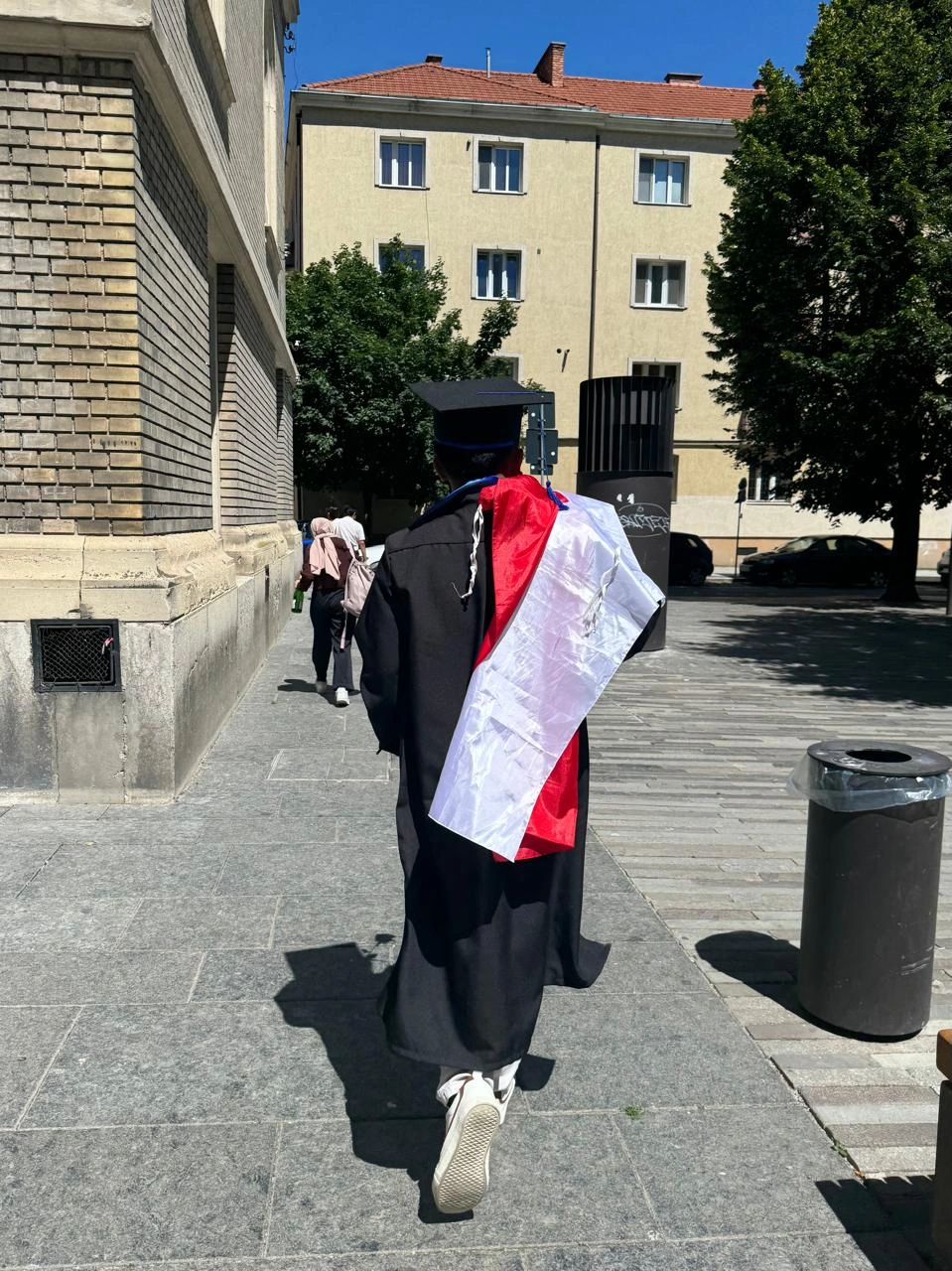
To be clear – Cluj-Napoca, when I lived there, was not some soft European dream, not the Emily in Paris version where not speaking the language somehow becomes charming and glam instead of making you sweat through an exam question at Babeș-Bolyai. It was good and bad and beautiful and ugly and cold and hot, all at the same time.
Romania was the cheap hotdogs and Ciucaș from Profi, the communist-era blocks freezing from December to February, and post-bar shaormerie at night. Romania was everyone asking me why, out of all places, that I study journalism in Romanian. Romania was treating Google Translate and DeepL religiously before exams, then spending most of the time just trying to understand what the question wanted from me. Romania was my best friend telling me to stay alert because a neo Nazi walked inside the bar that we were in. Romania was Romanians struggling to find Indonesia on the map because it was mostly Bali from those all-inclusive holiday packages and wherever the Instagram influencers visit for Asia Express on Antena 1.
Romania was, among other things, also a tale of residence permits. It was the old Inspectoratul General pentru Imigrări (IGI) office at Iulius Mall in Cluj, where us foreigners stayed inside the mall overnight just to get a number for the next day. I remember reporting on that mess for Romania Insider in 2022 and thinking, “Ah, so bureaucracy can humiliate you in Romanian too.” Thank God, Cluj mayor Emil Boc read the piece. I am not saying my article drove the change, but not long after, the immigration office did have a small dedicated counter for international students.
By the time I left in the summer of 2025, they had moved the whole thing to the Mall’s parking lot, which did not exactly solve the humiliation.
***
Jakarta, Indonesia, the summer of 2025. After almost 5 years in Romania, I come home and find I have become exactly the kind of person I used to hate listening to.
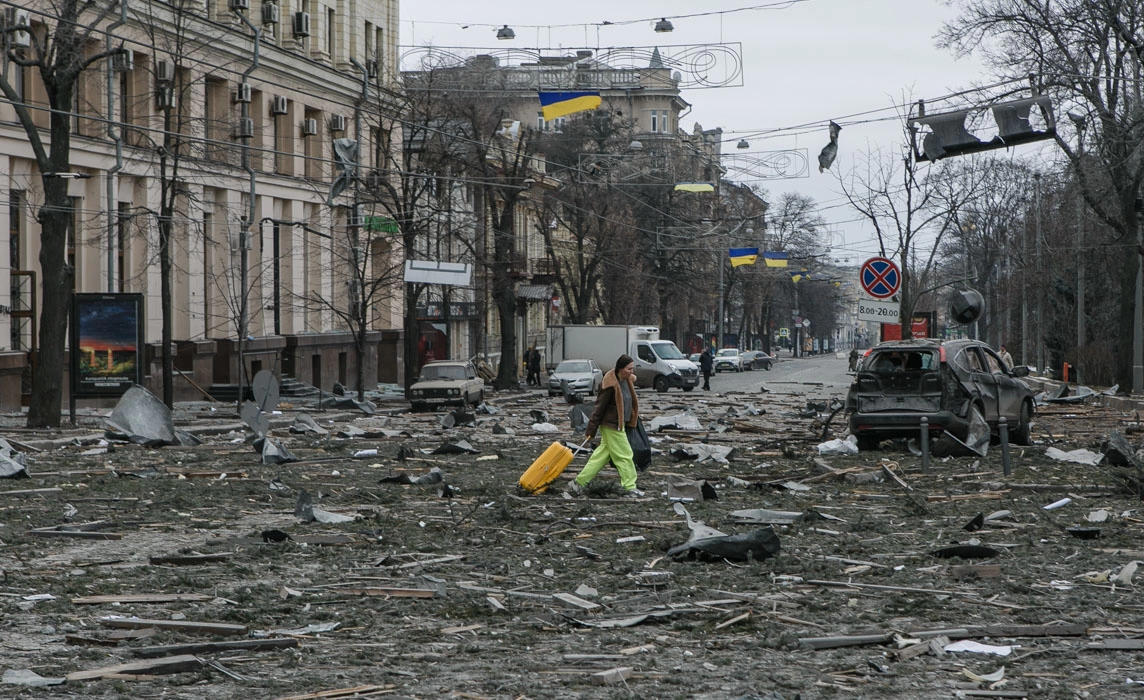
The heat comes first, obviously, because this 40-million-people metropolitan area at one in the morning still feels close to thirty degrees and the humidity sat on my skin. Thirty degrees in December and January too by the way, are you joking? Then, come the traffic, the pavement, the motorbikes, the cables hanging at shoulder height, and the fact that the next morning my feet kept looking for a sidewalk that was either broken or never really there.
I returned to Jakarta in July last year after years in Cluj-Napoca, a place I had called “home” long enough that returning to Indonesia made the word home need quotation marks. Not that I expected a grand bouquet from my mother and friends, or a long red carpet rolled out at Jakarta’s Soekarno-Hatta International Airport with “WELCOME HOME” posters printed in my honor. No.
I had expected something to settle, or at least, some kind of click of recognition. On the plane, just before landing, the captain had said something like, “If you are visiting, enjoy your stay, and if you are returning, welcome home.” That was poetic. Instead, I came back and started complaining, and God forbid I had become that guy.
I know my Indonesian friends are tired of it. They call me the “Europe boy” because I keep talking about how in Europe it is like this and in Jakarta it is like that. I keep complaining about how peak-hour TransJakarta felt so tiring, and how a twelve-minute walk from the station near my place feels exhausting because the sidewalks disappear. About how Jakarta has the public transport system of metro (MRT and LRT), the trains (KRL), the buses (TransJakarta), and the minibuses (JakLingko), but rush hour still feels like being crushed alive. About how public life here happens in malls, but in Cluj, I could just sit and exist outside.
They have every right to get sick of me. I would be sick of myself too.
***
Actually, “Europe boy” is pretty inaccurate when said in English, and it hurts more when said in Indonesian. It’s "sok bule" — a bule means White person, specifically. A bule is the White foreigner, not just any foreigner. Sok means pretending to be something you are not. When put together, it’s saying, “You’re acting White. You’ve started wanting White-people things. You’re now acting all high and mighty.”
What’s so White about wanting a proper sidewalk? What’s so high and mighty about expecting public transport to work during peak hours, in a city of forty million, in the country’s own capital, on the most economically privileged island in the archipelago?
My office is in Central Jakarta, and I live in the South, so on paper the route looks reasonable. When I go home from work, I take the metro from the last station to ASEAN and follow the crowd toward CSW’s TransJakarta stop, where everyone going south seems to gather with the same tired face. At first, I looked normally tired in a socially acceptable way.
Then, the bus comes. If you’re one of the lucky ones, you will not have to squeeze yourself between other people’s shoulders and bags.
This is usually when I remember Cluj, which is unfair to Jakarta. In Cluj, I could be tired after class or work, and still walk somewhere in peace. From the dorms around Grădinile Mănăștur, the route toward Parcul Central or to Piața Unirii could be cold, ugly, slippery, or boring, depending on the month, but it never required the vigilance Jakarta demands from me every evening. I could pass the communist-era blocs, the old bunici walking their dogs, the small magazin de cartier, someone carrying groceries from Profi, someone smoking Kent on a bench outside, and nothing in me had to stay on alert for the next broken curb.
By the time I get off, my body has already been used up by the commute. The remaining walk home is like 12 to 14 minutes short, but in the most Jakarta-n fashion, it is long enough to make me angry almost every day. The road starts to rise a little, and by the bridge over the canal, the space for walking narrows into a thin strip at the side of traffic. Cars and motorcycles pass close enough that I keep my bag pressed to my body. Below, the canal with disgustingly dark water runs between concrete walls. Beside me, the road keeps moving.
I step around broken concrete, wait for a small opening, move forward, and do the same thing again a few meters later. By the time I reach the street toward home, my shoes are dusty and my shirt is damp.
***
We, Indonesians, have a defense mechanism against discomfort like this, and that is to tell ourselves to “be grateful.” There’s a legit study about it, too.
Be grateful. At least you arrived safely. Be grateful. At least you have a job. Be grateful. At least Mother is waiting for you to come home. Be grateful. At least the traffic is moving albeit slow. Be grateful. At least the bus came, on time or not. Be grateful. At least you are not the one sleeping under the bridge. Be grateful. At least Jakarta has the MRTs and the LRTs and the whatever RT’s of progress stacked on top of one another. Be grateful, at least, at least, at least.
I was raised inside this mindset and have used it on myself for who knows how many times. Sometimes it gave the bitter taste of survival a soft and comfortable little cushion. When money was short, gratitude gave the day a floor. When something broke, gratitude made the damage feel less total. It keeps you from losing your mind, especially living in a country where so many people are asked to survive with very little.
So, I do not want to mock gratitude too easily, because it would be inaccurate. When the world asked too much from Mother, gratitude helped her keep our family, and when the world gave me a lot, it helped me keep my feet grounded.
In Indonesia, gratitude can be generous. It can be the way someone hands you food even when they do not have much. Or, it can also look like a stranger pressing toothpaste into your hand during the August 2025 protests in Jakarta, the week when tear gas became part of the city’s weather again, telling you to smear it under your eyes before the burning reached you. That is the part I do not want to lose.
But after Romania, this gratitude arrived exactly at the moment when anger would have been useful. I do not think that we, Indonesians, have been angry enough.
You complain about the pavement, and someone says, at least you can still walk. You complain about the bus, and someone says, at least we have public transport now. You complain about the heat, and someone says, well, this is Indonesia. You complain about crossing the street, and someone says, be careful then. You complain about bureaucracy, and someone says, that’s normal here, what did you expect?
I did expect that, but my expectation is actually small, almost borderline ridiculously small.
I expected a functioning sidewalk. I expected a crossing to behave like a crossing. I expected walking to be boring. Indonesia’s weather is either hot or very hot, fine, I was born into this sauna. But I expected that public transport wouldn’t punish me for commuting at the heaviest commuting time. Jakarta made things that aren’t European luxury feel like an “arrogance” of the “Europe boy.”
But in Cluj, even when I was lonely, flat-out broke, freezing, and mispronouncing t and ț and all the Romanian a’s, I could walk to Plaja Grigorescu that didn’t feel like Bali but it did the thing with sand and Someș water. I could take the CTP bus or tram and be annoyed by it in a normal way. I could go to Parcul Central and sit outside without needing to buy anything grand. I could cross near Opera Maghiară and raise my hand like an overgrateful little idiot, even though I knew that the car was not doing me a personal favor by not killing me. It was that simple and ordinary.
***
So when I came back to Jakarta and my friends got tired of my geography of irritation, I understood them.
This was home-home, or at least it was supposed to feel like that. Mother was here, my sister was here, and my friends were here. I had work, Nasi Padang, GoFood (Indonesia’s version of Glovo and Bolt Food), and people who understood my jokes culturally. I had no right, really, to act as if Jakarta owed me a special committee for the emotional damage caused by broken sidewalks.
Still, under all the whining, there was an accusation I kept hearing in my own voice. Who the hell did I think I was now? I was raised here, then left for Romania for five years, and came back acting allergic to my own country. The accusation hurt because some part of it was true, and I did become more difficult.
I became the person who says “In Cluj...” or “In Europe...” and then watches everyone bore themselves to death for another unsolicited TED Talk from Rafly. I became the Europe boy who can turn a missing sidewalk into fifteen minutes of urban planning opinion nobody asked. Some of that is arrogance. There is a moral danger in returning from elsewhere and suddenly looking at your own country and homeland with foreign eyes. Those eyes can be cruel.
I should also say that I am not done with Cluj, and Romania is not a closed chapter. I am coming back, but because my life has been eaten by IGI before, I have to say this with a little humility in my throat. Still, it matters. Cluj is still somewhere I am trying to return to, which makes the whole thing much harder to explain.
I have actually tried to shut up and be normal. I have tried to stop saying “back in Cluj” or “back in Romania” as if Mayor Boc or the Romanian Ministry of Foreign Affairs had sponsored my personality. Nobody asked for my opinion on Jakarta’s potholes. I knew this heat before I knew snow. I knew Jakarta before I knew how to pronounce ț, ă and â. This is home. The home-home. I know I have to be fair.
My body has no interest in being fair.
There is too much evidence, too quickly. Someone tells me to be grateful because things have improved, and the sentence has enough truth to make it difficult to argue with. Jakarta has built enough visible progress in the half decade I was away that complaining can make me sound spoiled, especially when I am standing inside that progress, waiting for the metro that will take me home.
The moment I step outside, my hand rises at the crossing before I decide to lift it, and my shoulder pulls inward when the pavement breaks beside traffic. This is the part of coming home that unsettles me most, how easily I still know what to do. I get home to resent, then feel the anger soften into something dull enough to pass for tiredness.
Why must walking ask this much from a person?