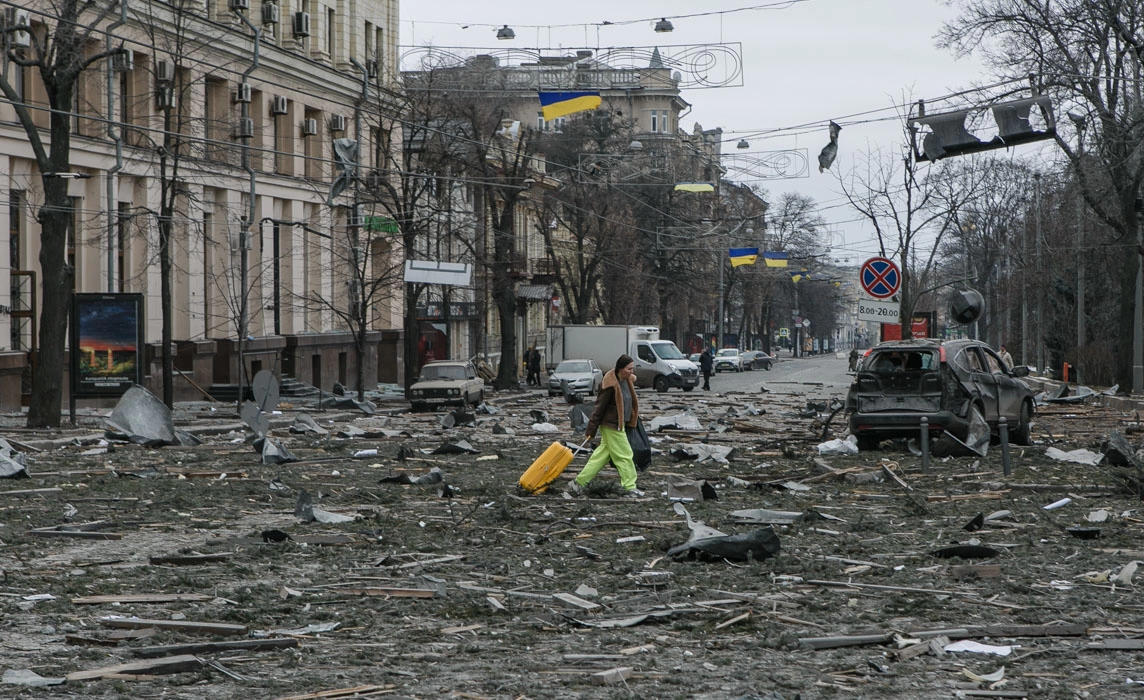
By the age of 22, Mires Peniushkevych has already staged more than 15 theatre productions in Ukrainian cities where theatres still operate. None of them is about escaping into parallel realities or simply entertaining audiences. They speak of about crimes against humanity – war, Nazism, the Holocaust, and brutal repression. Not everyone is happy about that.
Mires, a 22-year-old theatre director, checks his phone before leaving home – not only for messages, but for the air raid alert app. The route to rehearsal runs through half the city, and some nights the transport simply stops.
Three times a week, eight people gather in Kyiv to work on a play about a Jewish family packed into a cattle car, and an American family living under a stolen name in Nazi Germany. Outside, the city runs on generator schedules. The rehearsal schedule hasn't changed once.
“It seems to me that Ukrainians have become so accustomed to the horror happening around us that we have no choice but to wake up, keep living, and try to move forward,” says Mires Peniushkevych.
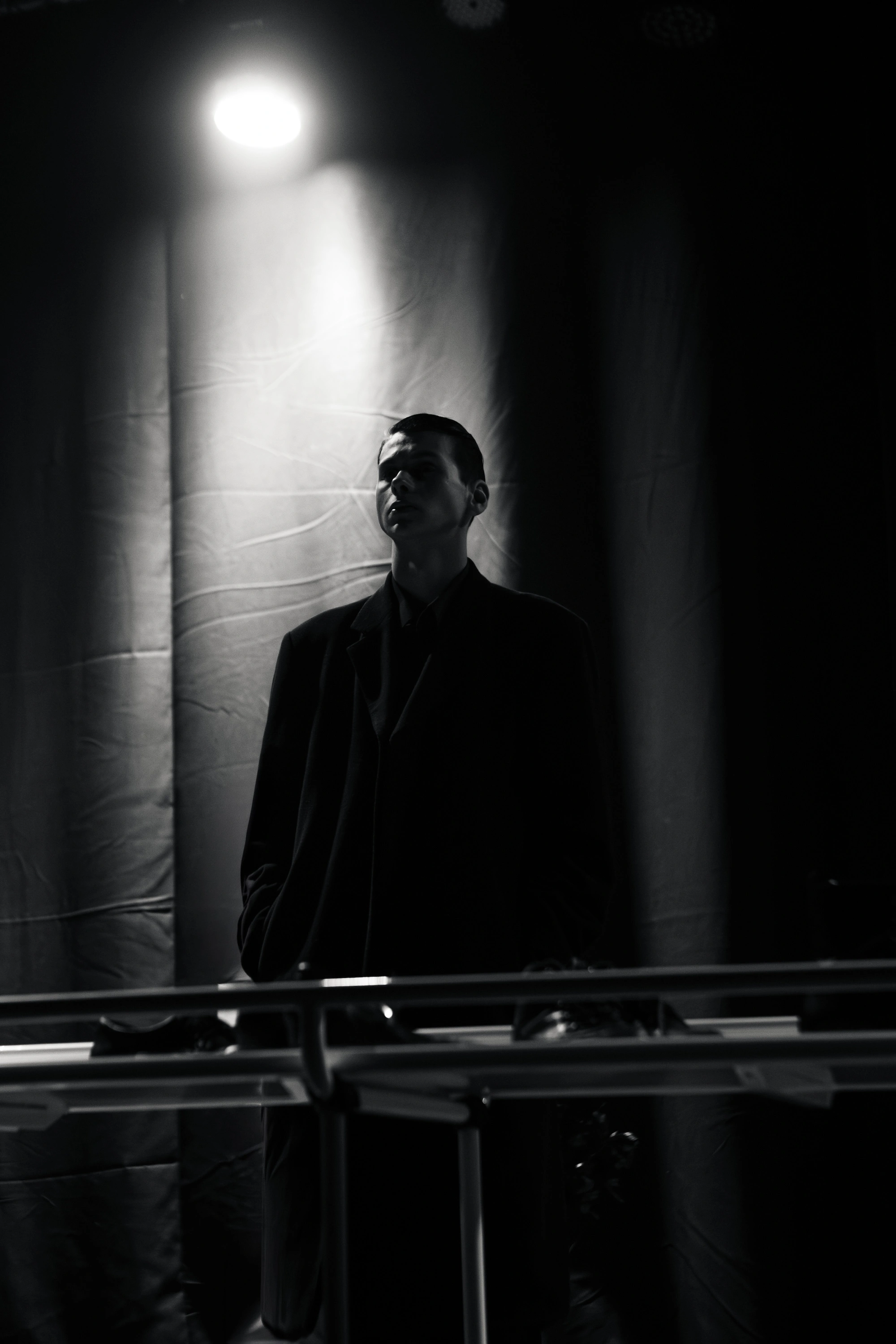
By the age of 22, Mires had already staged more than 15 theatre productions in Kyiv, Chernihiv, Odesa, Lviv, and other cities where theatres still operate. None of them is about escaping into parallel realities or simply entertaining audiences after work. In his productions, Mires Peniushkevych brings up the themes of crimes against humanity – war, Nazism, the Holocaust, and brutal repression. His insistence on staging painful subjects touches a sensitive nerve in a society still living through trauma, where many wonder whether such stories belong on stage while the war is ongoing. Yet despite rolling blackouts and rocket attacks, his team spent two months, from January to March 2026, staging Railroad – the first Ukrainian-American theatre production.
“I put on plays about war, Nazism, and communism. In a way, this is how I cope. Through art, you contribute – you do everything possible to help in any way you can. This is how I calm myself down.”
Known for his experimental approach to theatre, Peniushkevych often uses movement and physical expression as central storytelling tools. His work has been recognized at prominent Ukrainian theatre festivals, including Melpomena Tavrii, Golden Lion, and Golden Phoenix. At a time when many Ukrainian artists are searching for ways to address war, memory, and loss, his productions help audiences engage with difficult experiences rather than turn away from them.
Peniushkevych describes himself as a lifelong outsider. Growing up in Horodok, a small city in the western Khmelnytskyi region of Ukraine, he was extremely socially withdrawn and deeply introverted. He still won't go for coffee with an actor. But the moment rehearsal begins, something shifts. “When work starts, my emotional spectrum turns off, and the leader turns on. I know clearly where I am leading; I clearly understand what I want to say.”
His approach to directing is rooted in his experience as an actor from 2021 to 2023 – at the Theatre of Playwrights, in film, television and student theatre. “It’s very important to me that the actor understands that he is driven into such a framework that he breaks down the wall. Only then can he truly understand the person he is playing.”
The Outsider Who Refused to Sink
Peniushkevych did not grow up around theatre. His father died when he was one year old. His mother saved all year to take her children to the Carpathians or the seaside in summer – no small feat on a Ukrainian teacher’s average salary of roughly 20,000 UAH (around €400) a month. She put what remained of her salary into music school and dance classes for her children. Peniushkevych remembers walking into the staffroom at school and finding his mother asking a colleague for a loan – she had nothing left to buy bread.
His mother gave him something the outside world wouldn't – unconditional love and a quiet certainty that he mattered. School offered the opposite.
“Poverty is a very sticky feeling. I was always ashamed of it, and it took a very long time working with a psychologist to learn to accept it. But the bullying was worse because I was the only boy in school who did dance and music. I always liked to dress well – not just in tracksuits, as the others did. I tried to put looks together, combine things. Looking back at photos now, it seems very strange, but I was experimenting. Children are frightened when someone is different.”
When he enrolled at the Kyiv Municipal Academy of Variety and Circus Arts at sixteen, he worked simultaneously as a cook and a barista to survive. He was the youngest in his cohort, and the only one who had never been to the theatre before. He didn't know the difference between a play and a novel. “I find it very funny, ironic, that I am still working in the profession.”
After the full-scale invasion began and many directors left the country, an unexpected cultural boom followed. According to Publicis Groupe Ukraine’s Pace Panel study, published by AIN.UA, public interest in theatre grew from 24% in 2022 to 29% in 2024, with popular venues selling out 700-seat halls in under five minutes. Yet this growing appetite for theatre did not necessarily translate into opportunities for young talent. When Peniushkevych set out to land his first production during his third year in 2023, he reached out to over 30 theatres. The answer was always the same: come back when you're older.
“All I ever heard from the person in charge of set design was: 'What, did the kindergarten run out of spots? Are they hiring children for the theatre now?' One theatre even told me straight – you're a cat in a bag. Either we sink together, or you swim. And I swam.”
With each year, the ageism faded – not because he was getting older, but because his reputation was growing. “Objectively speaking, I'm far from the last person in the theatre world. When people invite me, they know it will mean quality and discipline.”
The Rise and Reach of Reptiles
That changed when Peniushkevych discovered Reptiles, a play by Oleksandr Zhuhan, at the Mytnytsia theatre festival hosted by the Left Bank Theatre in Kyiv. Described as a fairy tale for adults, the play explores the boundaries between magical and critical thinking. Oleksandr helped him reach out to playwright and theatre producer Maksym Kurochkin, now one of the co-founders of the Theatre of Playwrights (one of Kyiv’s leading independent venues), which agreed to stage the production.
The production quickly attracted attention, touring theatre festivals and earning invitations for additional performances, including at the Mykolaiv National Academic Ukrainian Theatre of Drama and Musical Comedy, one of southern Ukraine’s most prominent regional stages. For many in the Ukrainian theatre community, it was their first introduction to the name Mires Peniushkevych.
Art As Responsibility
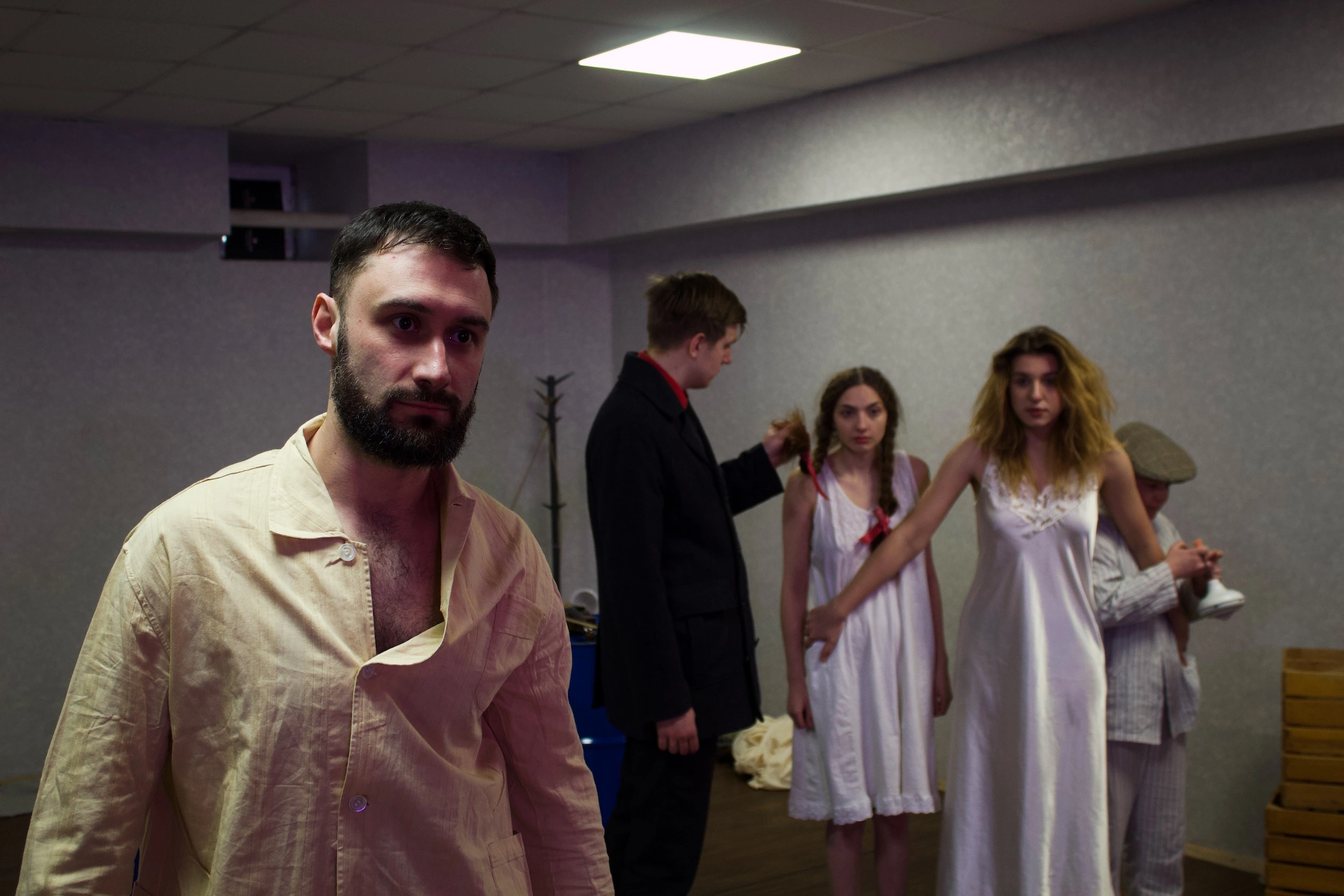
As the cast gathers before a rehearsal of Railroad, Peniushkevych puts on upbeat pop music to help everyone loosen up and lift their spirits. Instantly, everything around becomes a little less serious – the world seems to pause for a few minutes. Someone starts singing along, a circle forms, and for a moment everyone becomes carefree. I find myself among them, bouncing to keep the beat.
“Alright, everyone's here – let's keep going,” the director says, his tone not strict, but certain. And rehearsal begins.
Some of the actors have previously collaborated with Peniushkevych on other projects: with Anastasiia Zamoroka on 404. Location Not Found (a physical theatre piece based on testimonies of people who survived occupation) and with Artem Lopatin and Kateryna Zdor on Khuli Khuryna (a play exploring how the pursuit of excessive power can transform a person).
At 28, Kateryna Zdor describes this production as one of the most transformative experiences of her career. For one hour on stage, Kateryna transforms from a radiant young woman into Daniel – a vulnerable Jewish boy with autism. What initially felt like her greatest fear gradually became a revelation of her own artistic possibilities.
“There's still a boy living somewhere inside me, honestly,” says Zdor in a rehearsal break, her eyes full of enthusiasm.
“I would watch football just to feel connected to him, to be on the same wavelength. So for this role, I had to bring that boy out of myself and allow him to exist. This role became a turning point for me. I was terrified people wouldn't believe me for even a second. So I had to do maximum research, maximum observation, maximum deep work – so the audience would believe me, and so I would believe myself.”
This is Kateryna's second collaboration with Mires, following their production of Khuli Khuryna by Mykola Kulish, staged together with another director Vlada Belozorenko.
"He is a very engaged director with a clear story he wants to tell and a strong vision. Working with him is a pleasure – he gives you freedom and space, he sets markers of where you need to go, but allows you to create what you are capable of. I am happy to be here."
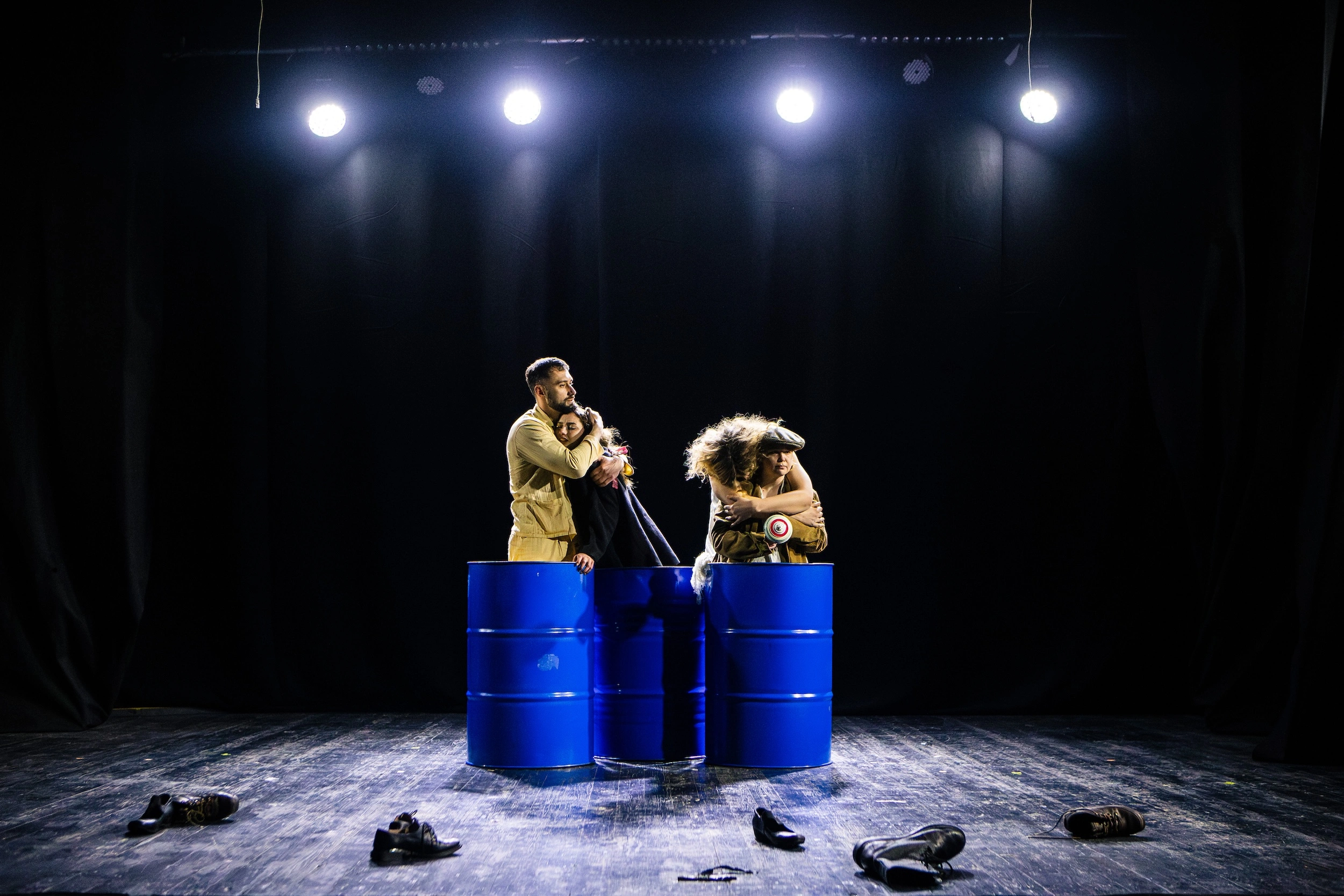
The rehearsals also became physically demanding. Kateryna constantly climbs onto barrels during scenes, often bruising her legs in the process. Daniel's small stature and autistic traits make his movements intentionally awkward and uncoordinated – something she wanted to embody authentically.
“I give myself to this role completely. Honestly, it may sound strange, but those bruises even matter to me somehow. It feels like they are part of what turns me into Daniel. I used to chase results all the time, but now I've realized I'm actually in love with the process itself.”
As part of their preparation, the actors also visited a boarding institution where around 65-70 children on the autism spectrum live. Spending time with them was essential for the cast – not simply to observe, but to genuinely connect, to understand their behavior naturally and truthfully rather than imitate it superficially. Kateryna was no stranger to such environments, having visited similar care homes years before the invasion. At the time, her husband was running his own business – a far cry from his current reality as a soldier, having volunteered at the start of the war before joining the military in 2023.
The Serendipity Effect
Bryan Reynolds is a professor at the University of California, Irvine (USA), and a playwright and director. He wrote Railroad in 2001, in the immediate aftermath of 9/11, at a time when the United States was trying to understand how evil becomes possible. Through the intersecting stories of a Jewish family fleeing persecution and a German family navigating life under Nazism, the play examines the limits of ethics, faith, and human choice in times of war.
Railroad has since traveled through Romania, Belgium, Sweden, Kenya, Pakistan. But here, now, in Ukraine, it may have found its sharpest audience yet.
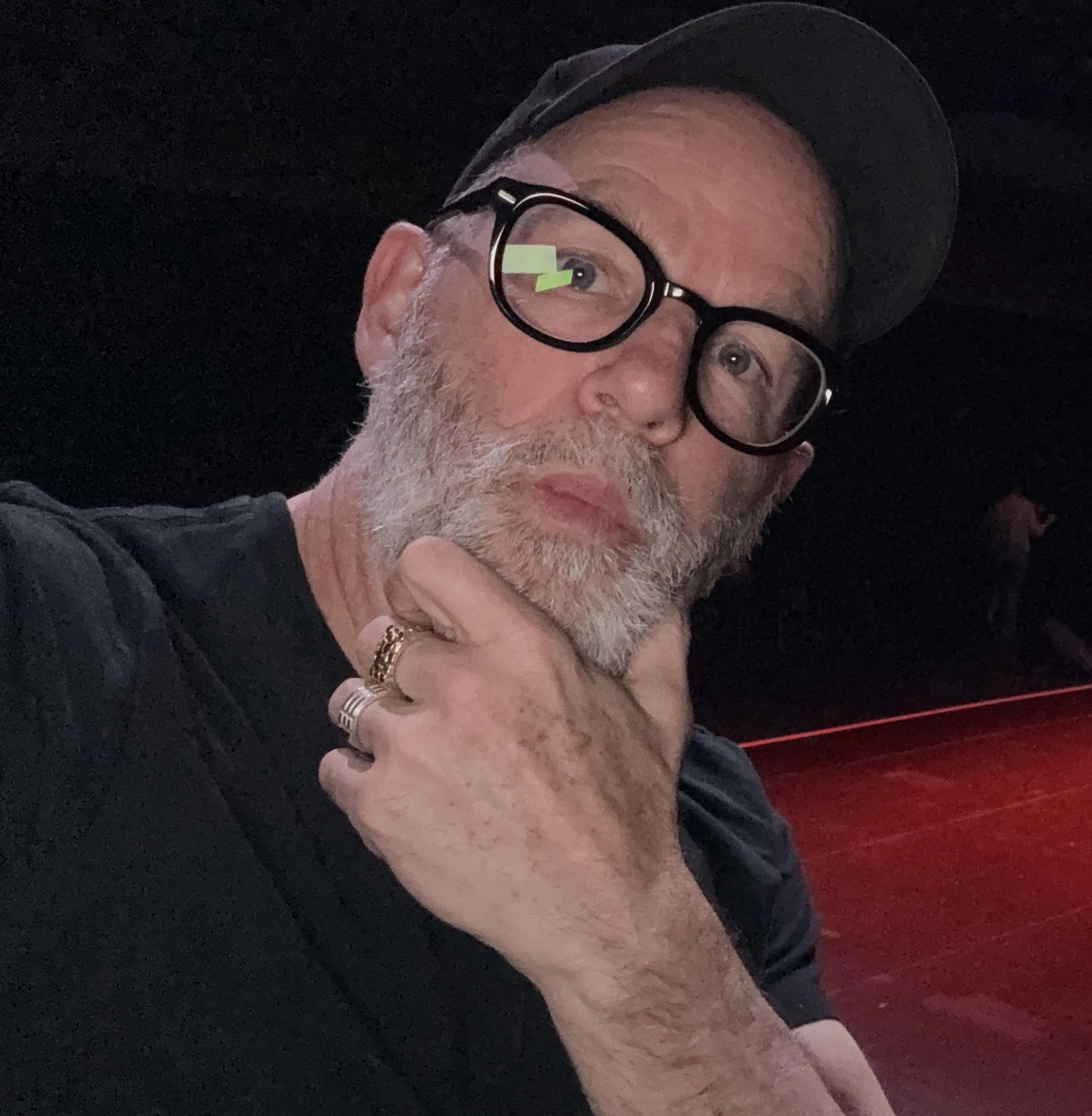
Reynolds was initially inspired to write Railroad because his students knew little about the Holocaust. Twenty-five years later, the play is here, in a country that is once again experiencing a similar historical lesson.
The collaboration between Reynolds and Peniushkevych began almost by accident. While visiting Kyiv in 2025, Reynolds attended Occupation, a physical theatre performance about family life in occupied Kherson. He was deeply impressed by its ability to communicate experiences of fear, uncertainty, and the psychological weight of war through movement and physical expression. Soon afterward, he reached out to Peniushkevych, explaining that he wanted to write about his work in a book about theater during times of conflict.
Later, he realized that their styles were very similar and he wanted to invite Peniushkevych to stage a play of his in Ukraine, co-produced by his Transversal Theater Company, an organization of American and European artists based in Amsterdam.
The playwright chose to hand the play over completely – to a director he'd never met in person, in a country he is still learning to understand. And Mires Peniushkevych chose to make this play in the middle of the war, not after it. The result is a production neither of them could have made alone, in a time that neither of them would have chosen.
For Peniushkevych, the premiere offered a whole new experience. He had stood on stages before – pensive, uncertain, sometimes surrounded by people he didn't want to be near. This time was different.
“I walked out and felt total ease, total love for the work, for the people standing beside me, a total desire to be in that place. I felt euphoric. The actors are constantly researching their characters. Extraordinarily talented people. And I am simply grateful to each and every one of them.”
Every production of Railroad is different, shaped by the director, designers and actors. But more than anything, it's shaped by audiences, who arrive carrying their own histories and fears, their own specific relationship to the question the play keeps asking: What are people capable of doing to each other when the world gives them permission?
“Railroad happens to be a remarkably adaptable play,” Reynolds writes. “Or rather, it's unfortunate that it is – because the issues in the play are relatable to people in so many countries across the world.”
The fact that Railroad remains relevant is not something he takes any pride in. “I wish that a play like Railroad had no place in this world. And that I had no reason to write it in the first place.”
On stage, the production is deliberately minimalist. The Nazi figure is not realized as an individual but as an embodiment of evil itself: his face and body concealed beneath black clothing: a long leather coat, heavy boots, and leather straps. Rather than focusing on a single perpetrator, the play examines how an ideology can consume ordinary lives.
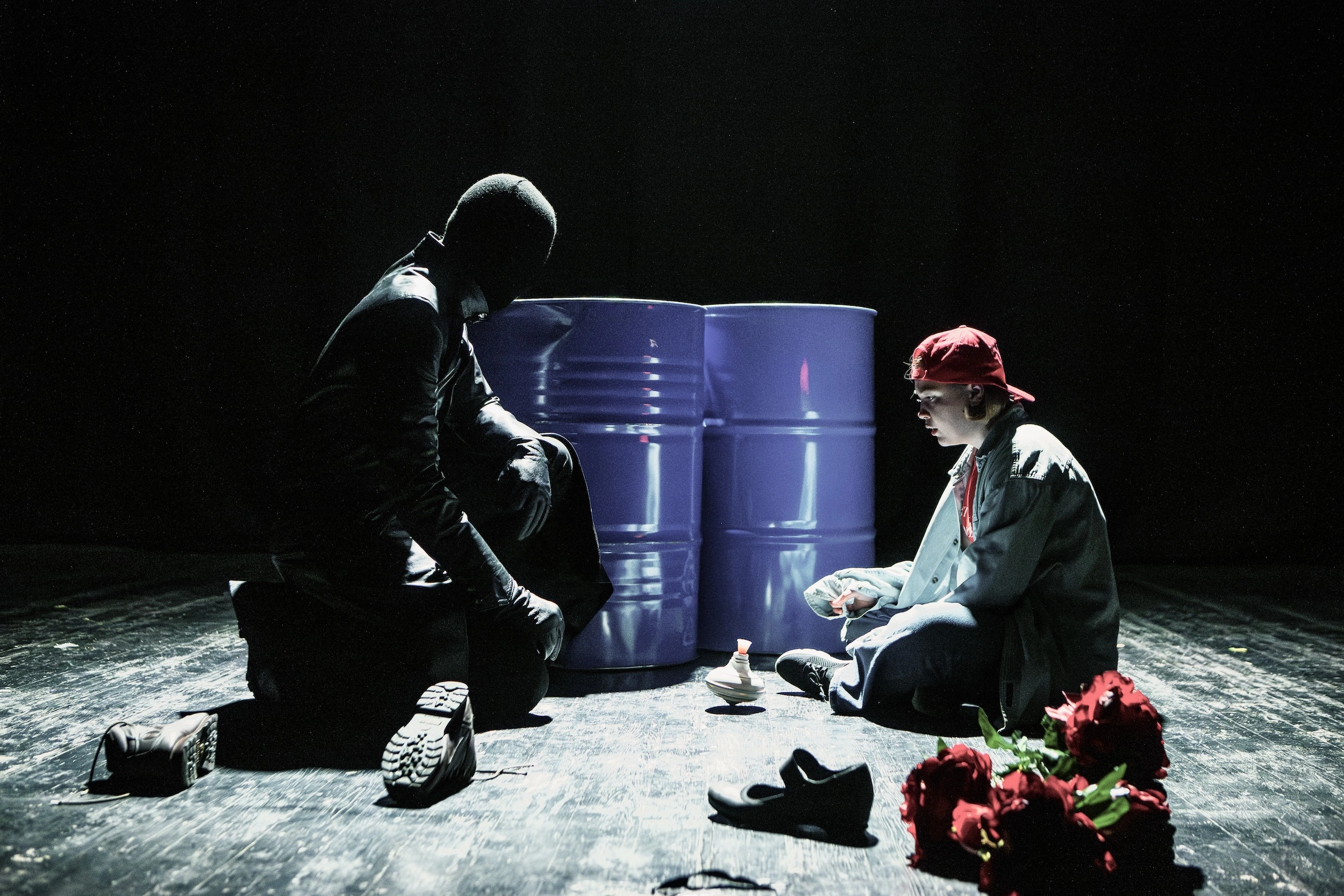
The effect is unsettling. When one of the characters insists, “I’m not going anywhere. I don’t want to leave my home,” the line cuts through the silence of the audience. What begins as a story about Nazi Germany gradually becomes a reflection on exile, fear, and the fragile hope of remaining human in inhuman circumstances.
“If we lose the understanding and memory of what's happening right now, we will repeat this history again”
Along the way Peniushkevych has heard the criticism. Some people are exhausted by the war – not just by living through it, but by being asked to watch it onstage. He receives messages asking how anyone could produce a play about war while the war is still happening. One artistic director told him directly that such subjects should only be addressed after the fact, once the dust has settled.
His response is blunt:
“It's happening right now. And it's not a fact that tomorrow we won't be living under the tricolor of Russia and these things won't happen to us in an even worse form. If we lose the understanding and memory of what's happening right now, we will repeat this history again.”
This is precisely the argument Reynolds has been making from the American side – that art is not decoration, not therapy, not a way of processing what has already safely passed. It is a way of staying awake inside the present. “Art puts the future that's possible before our eyes – not by representing it, but by showing that nothing is unchangeable, that everything can be reimagined and created differently.”
Peniushkevych has seen this in concrete cases. Audiences have written to him that they switched to speaking Ukrainian after seeing his productions. Mires recalls audience members telling him that his productions inspired them to start charitable initiatives of their own.
Bryan Reynolds came to Ukraine carrying a play about what happens to people when ideology overtakes humanity. He purposefully came to the country he sees as the frontline of defenders of democracy. “Your unwavering commitment, resilience, and strength are leading the world," he said. "You are what the United States once was.”
Somewhere between Reynolds' text and Peniushkevych's staging, between an American playwright trying to make sense of a broken world and a Ukrainian director rehearsing through air raid alerts, a question took shape:
What stands against evil – and does memory help to avert it?
Neither of them has a direct answer. But the play continues.