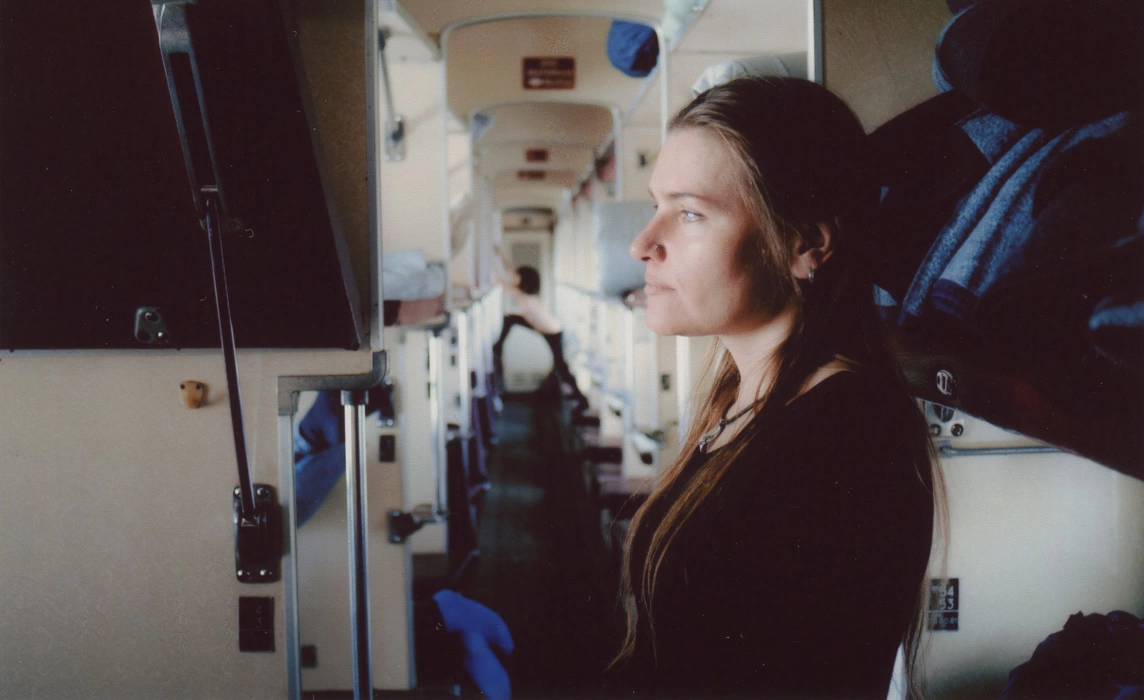
Ehsan Khoshbakht is an Iranian-born, London-based filmmaker, film curator, and writer originally trained as an architect. He is a prominent figure in international film preservation and is currently the co-director of the "Il Cinema Ritrovato" festival in Bologna, Italy, which is dedicated to film history and restorations. His films, working with archives, are not passive histories; they are acts of cinematic rebellion. His work functions as a clandestine resistance, using rare and salvaged footage to resurrect an Iranian identity condemned to oblivion.
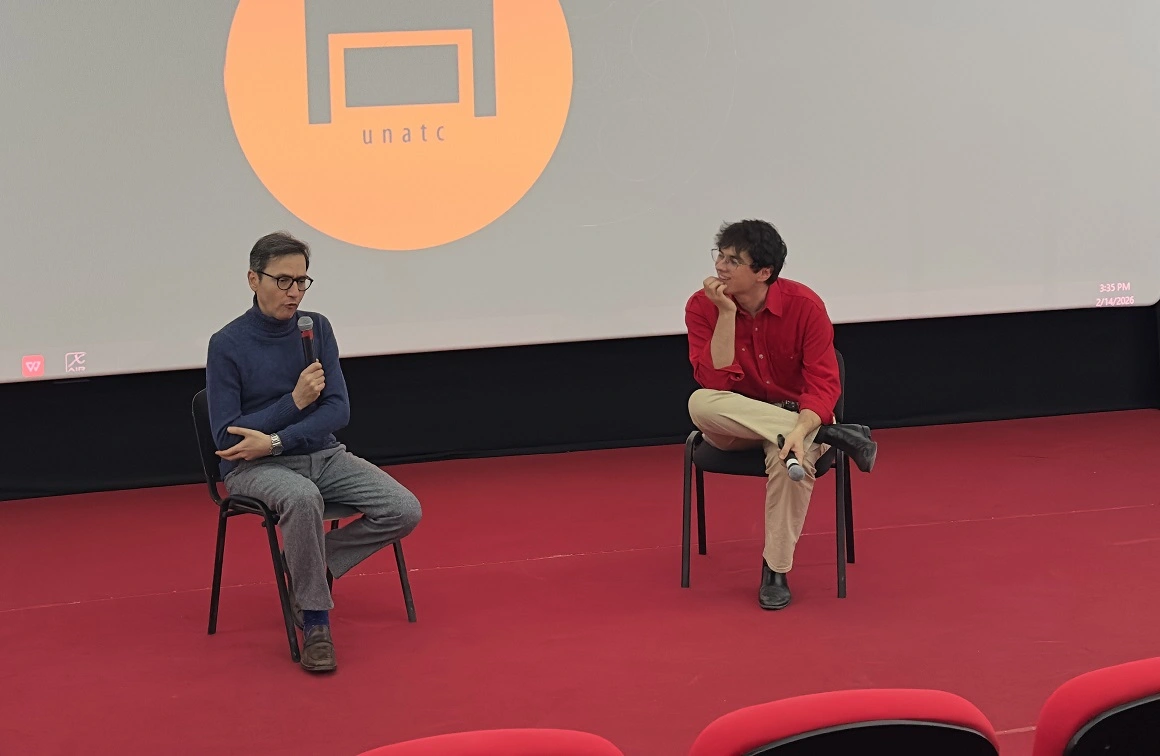
It was a pleasure to discuss with him Iranian cinema, politics, culture, and society. After the screening of his film Celluloid Underground (2023) at the National University of Theatre and Film in Bucharest, I interviewed him in a seminar room, on the second floor – close to the classroom where I studied during college. For me, the nostalgia of those university days overlapped with the nostalgia of Iran, a country I visited twice, in 2017 and 2018. I am connected to Iran by many ties: my archival research for Between Revolutions (2023) – a film that bridges the stories of two women and two countries, Romania and Iran – as well as my interest in Iranian cinema, culture, and language.
I want to thank Ehsan Khoshbakht for his openness and generosity – it was an emotional discussion that ended in grief while discussing the aftermath of the recent protests in Iran. Since recording this interview, the situation has changed fundamentally: a full-scale war has begun. I cannot help but wonder how and when this conflict will end – hopefully very soon – and how society will eventually process this trauma. I also find myself questioning how the cinema of tomorrow will mirror the people's struggles against both a criminal regime from within and an external aggressor.
Scena9: I'm really happy to meet you, and thank you for the opportunity to talk about your work! I’ll start with your documentary, Filmfarsi1, which I watched recently. I was impressed by how elements of this pre-revolutionary cinema prefigure the Islamic Revolution of 1978–1979. I am curious if you can decode similar ideas in contemporary Iranian cinema that might point toward a possible future for Iran.
Ehsan Khoshbakht: It's very difficult to answer this question for two reasons. One is that I am not closely following Iranian contemporary cinema. When I worked on Filmfarsi I looked at a large block of films within a very short period of time, and I had the luxury of time and distance to look at them again after a while. And always meanings emerge from the work by looking at the work - that is not available to me now with the contemporary films. And there is the second factor that makes it very difficult, that contemporary Iranian cinema is too conscious, self conscious about the political situation in the country. Whereas Filmfarsi was subconscious or even unconscious about all these themes that emerged through the films. Now, if you make an underground film in Iran, you're already tuning into the most conscious way of reflecting on the situation. And because of that, it's sort of pointless to look for signs because the films, as in the case with Mohammad Rasoulof2 are head-on confrontations with the situation. So it is designed to address that and it becomes a completely different type of work.
"I think I am, generally speaking, drawn into things that work on the subconscious level in cinema rather than sort of straightforward attack, exposure and confrontation."
So in a way, you can compare Filmfarsi to classical Hollywood, where most things you have to read between the lines, most things are subconscious and you're looking for the subconscious elements. Whereas in later period films in American cinema, New American Cinema of the 60s, and 70s, many of those questions are again up front. They are there in the most explicit manner. I think I am, generally speaking, drawn into things that work on the subconscious level in cinema rather than sort of straightforward attack, exposure and confrontation. These are completely different types of films, and they have completely different functions. I think I take more pleasure from studying things that are not visible and finding those elements, invisible elements, and weaving them together.
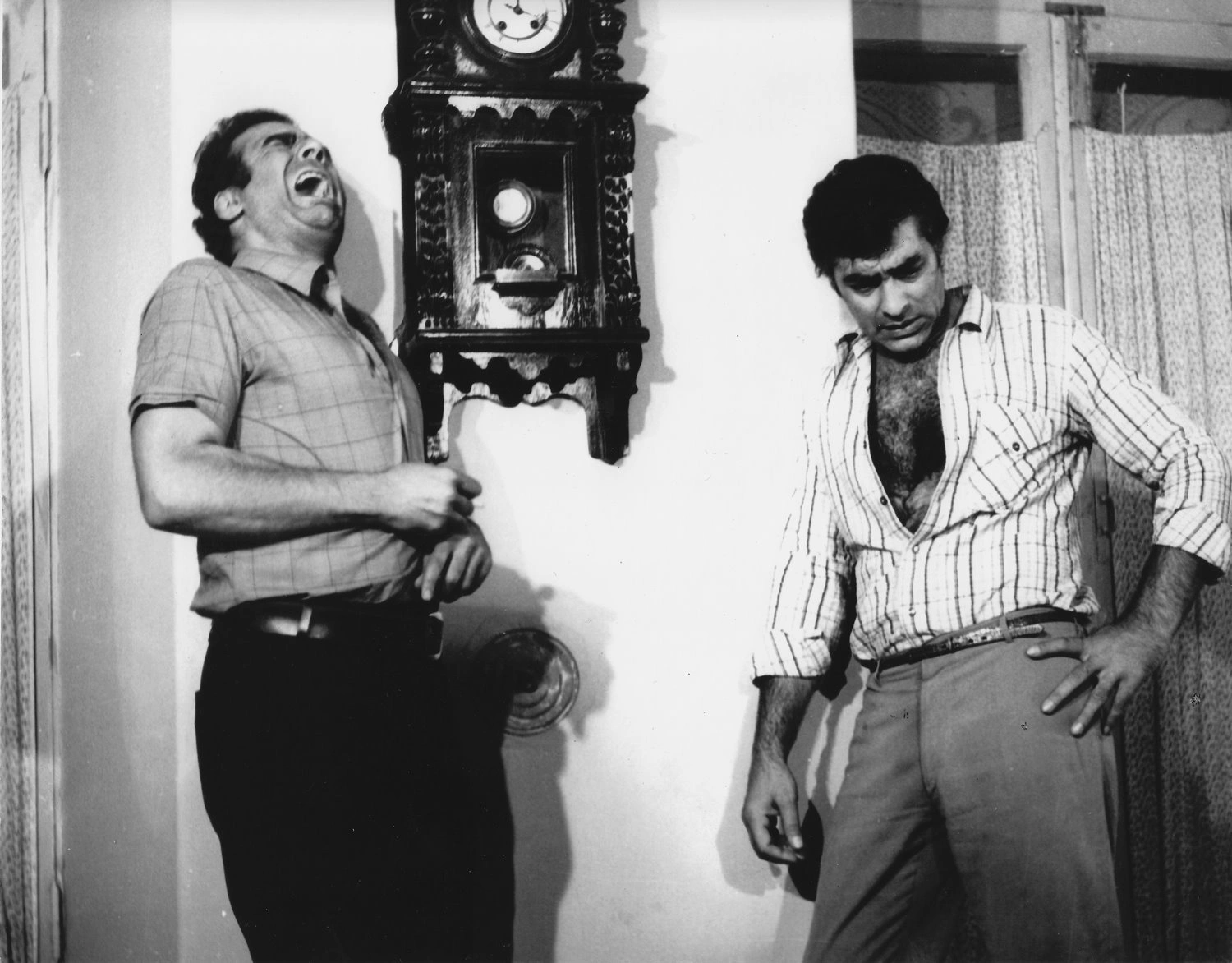
I'm interested in the cultural geography of Iran. In the region, Iran has the most acclaimed cinema compared to the Gulf countries or its other neighbors. And although it currently has an authoritarian regime governing all aspects of life, making it difficult for filmmakers to express themselves (with many of them being jailed), they still produce powerful, challenging films that deal (as you said before) directly with politics and society.
It has something to do with the existence of film culture, because it's been there since day one. Cinema got there very early, and film and going to cinema became an integral part of Iranian life for many social classes. So Iran was culturally in sync with the rest of the world for most of the 30s, 40s onwards. Yesterday I overheard a conversation between some people here. One would say, "Oh, they are translating this text by Pasolini". All his texts were translated in Iran at the same time as they appeared in original Italian. It's been constantly in sync. There has been this obsession with being in tune, in sync with the rest of the world, with culture and cinema in particular. Because of a sense of curiosity and also a sense of cultural isolation by language3. And that sets it apart from Arabs who didn't have to do anything, because Egypt was traditionally producing films for 16 to 20 different countries. They were the hub. They were producing for the rest of the Arab speaking world.
Same about Mexicans doing it for Latin America, except Brazil – producing films for the entire Spanish speaking world. So I think with Iran, the isolation of the language was a blessing - you have this particular, very strong film culture emerging. In many ways, I find many similarities between Iran and Hungary – this isolation by language entrapped in between different countries that are drastically different from you. And so you constantly come up with different things. And most of the things you do are rooted in literature. So you have a deep admiration and reverence for literature. The earlier definitions of cinema are always judged based on their affinity and relation to literature and you have that in Iran. And since that culture has existed and all these films have been screened up until the revolution – Soviet, French, Japanese, Egyptian, Hindi, Turkish films – you absorb all these influences. So there's this openness and curiosity.
And then there is the other thing. The other element is that Iranians from the beginning of 20th century were scattered around the world. Not as much as it is now, but they were around. And because of those links to the outside world, that also reinforced culture. Look at the birth of Iranian sound film in India. The whole episode of exchanges between India and Iran, a country that in the past was part of the Persian Empire, some parts of it. So you have the language elements already there. You have the Parsi4 people there. And when I was in India recently, I was just so amazed that I could go to the restaurant and look at the menu and I sort of understood what it was. So you have Sepanta5, the Iranian writer going there and teaming up with Ardeshir Irani6, who is Parsi, to make the first Iranian talkie, as Irani was making the first Indian talking pictures as well. And before that, Sadegh Hedayat went there to publish The Blind Owl7.
"The Iranian regime's current biggest nightmare is the Iranians abroad."
And then you have the birth of Iranian film industry after the Second World War, because Doctor Koushan8 was in Vienna, under the Nazi regime, working there. And he learned these things about the film industry and then he returned to Iran after the war and he started Pars Film. So you see, film culture is in tune with a certain European, Central and Western European tradition in filmmaking.
And when you get to the New Wave9, you have all these people who've studied abroad. For instance, you have Kamran Shirdel10 from Centro Sperimentale, you have Mehrjui11 from UCLA, you have Saless12 from Vienna and Paris, you have Ovanessian13 at London Film School. So it's always people who are scattered, even in Moscow and at FAMU in Prague, even in the Eastern Bloc. So they all come back and they just add to this eclectic film culture. So I think it was the connection with the West and East as well, mostly West. It's a constant exchange.
And to this day, the Iranian regime's current biggest nightmare is the Iranians abroad. It was a force of alternative voices back then, including the leftist students, all those Cherikha-ye Fadayi14 outside Iran, people in California and other North American universities, students in West Berlin, in Paris. So sort of the core of the leftist and some of the revolutionaries, some of the Pro-Khomeini15 figures, they all came from these Western universities. So you see both positive and negative aspects. This is just about exchange as it is about Iranian culture from within the country.
You know, this whole idea of being in tune with the world is also something that is essentially the idea of the empire that Iran was once upon a time.
"It's one of the major paradoxes of Iranian pre-revolutionary cinema. As society was not that progressive, films showed life as very progressive. When life reached some level of progressiveness, the films tried to show more backwardness."
I want to go back a bit to Filmfarsi. I saw this in your film and in other films from that period: a feeling that somehow cinema disconnected from people's real struggles.
It's escapist cinema. They still address some issues. But these answers are silly and stupid. The questions are probably relevant. The answers are always very, very escapist. And there is this increasingly dominant voice of Islam in Iranian popular films made under the Shah. They become more and more Shia in a way which is already responding to the changes in society. So I always say it's shocking to look at Iranian films from the 50s. You hardly see any woman with chador16 in those films. But when you look at the films of the 70s, there are women in miniskirts, but also with chadors. So there is this shift. Neither of them were true, because the image of the Iranian women in the 50s was a totally fabricated image, trying through cinema to create a middle class that didn't exist yet. In the 70s that middle class already existed and all of a sudden the films became reactionary. It's one of the major paradoxes of Iranian pre-revolutionary cinema. As society was not that progressive, films showed life as very progressive. When life reached some level of progressiveness, the films tried to show more backwardness.
Another thing - in the '70s, in crime films you see this idea of Shahadat17 martyrdom constantly, which is very problematic. They're very violent, and the male character usually gets killed. This whole idea is really tuned into the concept of Shahadat and Imam Hussain18, and I've shown in my film the images of Imam Ali. I mean, it's unbelievable. You don't see Imam Ali in films of the '50s, but in the '70s there's Imam Ali in every single house. Why? I don't know.
"You have no idea how crazy I was about Sergiu Nicolaescu. He was wonderful. I was absolutely in love with those leather jackets and the feather hats and the machine guns."
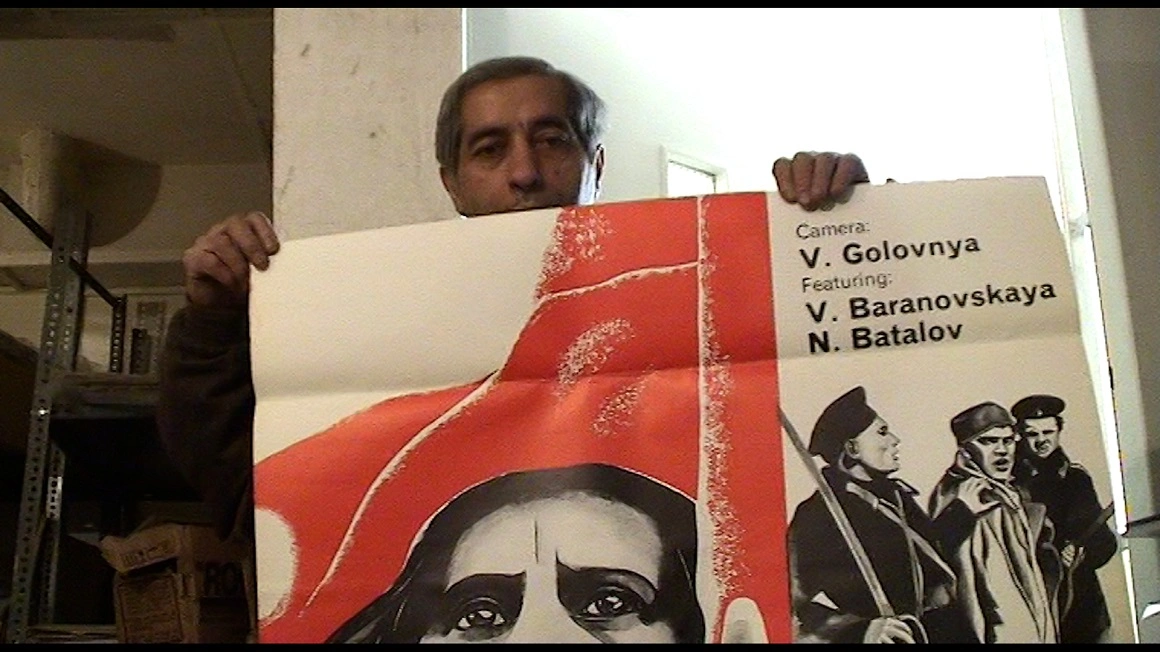
Let's talk a bit about the connections between Romania and Iran, which is also something that preoccupies me. I've read your article about Sergiu Nicolaescu and your connection with Romania through him. As for me, while I was in Iran, people didn't talk much about Nicolaescu - I mean people I've met randomly on the streets -, but more about tractors (Tractorul Brașov, a factory from the Communist period opened a subsidiary in Tabriz and produced tractors there) and about Ceaușescu's last visit in 1989, a week before he was executed, an event that you also mention in your article about Nicolaescu.
Well, I don't really know about Romania that much, but I think what actually Romania has in common under Ceaușescu to the Iranian pre-revolutionary period is this false, fabricated image of the sort of a national hero like the one embodied by Sergiu Nicolaescu. It is this character put together from many different elements, national and international, to forge a sort of a hero. A national hero that stands above everybody else and is the voice of justice and power and masculinity. I think the closest analogy is probably Fardin19. He was a world champion in wrestling. So you bring the ancient tradition of wrestling married to a very modern art form, cinema, to create a folk hero for people – like Moldovan who was with this policier, gangster film aesthetic. It's a very unusual combination and somehow it works. And when these films were shown in Iran, of course they were like an oasis. There were no foreign films shown during that period (after the 1979 Revolution). You have no idea how crazy I was about Sergiu Nicolaescu. He was wonderful. I was absolutely in love with those leather jackets and the feather hats and the machine guns. It was standing outside time as well, because it was a bit the '30s, it was a bit the '40s, but it was also a bit of the '60s in terms of the leather. It was like Jason Robards in The St. Valentine's Day Massacre by Roger Corman. He stood slightly outside of time. A bit confusing, even though the references were also to the Nazi period, but it looked more modern than Yugoslav partisan films that I also saw as a kid and I liked. But not as much as Sergiu Nicolaescu's films, because he was modern. He was handsome and there was something confusing about him. The confusing part, the aesthetics were just so mixed that it was pleasantly confusing.
I suppose that you saw these films dubbed in Farsi.
Oh yeah, very good voice in Persian.
Most of the Iranians I've talked to told me that they had the best dubbing actors in the world.
I'm very much against dubbing, but it was considered sort of an art form, like in Italy. If you study the origins of dubbing, it is about people going outside and saying, „how can I make this accessible to my fellow countrymen?” So in the beginning, dubbing for Iranian films was done in Istanbul by Koushan and in Rome by Iranian students, dubbing Italian films. And when they dubbed, they tried to make everything look Iranian. So not only did they adapt the films, they changed the names of the characters, from Michele and Alberto to Fereydun and Abbas. The first Iranian dubbed film was called Fereydun-e Binava20 (Fereydun the Penniless), which was originally a French film. It's also something regional. It's the culture of the region. Recycling culture.
Going back to the Romanian-Iranian connection...
The difference between the Iranian and the Eastern European cinema that I have observed from afar, not in any depth, is in the level of dissent. The essence of Iranian modern cinema is a culture of dissent, always opposing the dominant narrative ideology. Since the '50s. And this is something that you don't see in Eastern European cinema all the time. You see it in, I guess, in Romania appearing at some point. But in Iran it was always there. And the idea of an art house director was someone who was saying: „Fuck you!” And I think that's so rare and so special. It does not exist in Turkey, but Turkey went through very hard times and military coups. You have Yılmaz Güney there. But in Iran? It's like this person dies and passes on the torch. It never stops. Farrokh Ghaffari21, Ebrahim Golestan22, Forugh Farrokhzad23, Dariush Mehrjui, Nosrat Karimi24. It just goes on and on and on. It continues. After the revolution you have it and constantly regenerates itself and passes on to the youngest director. It's always about saying no to the system and that's very unique and that's what has kept that country alive. Otherwise, Iran must have been dead a long time ago, completely wiped from the face of the earth. Culturally, not as a geography. You can always have a flag and national anthem, but who gives a damn if the culture isn't thriving and living on?
Romanian and Iranian films were (and still are, to some extent) some of the most sought-after on the festival circuit. For many, the way Romanian cinema emerged from a period of stagnation was a major surprise in 2001, marking the start of an era that redefined the country's artistic identity.
It is very curious that the only country in Eastern Europe that started to have an internationally recognized cinema after the fall of communism is Romania. It was quite the opposite for every other country in the Eastern bloc, because they had great cinemas and they just lost them in capitalism. So in Poland, Hungary, during communism you had all those great films and filmmakers because there was a state support for them. It's gone now. There are still some fine films being made, but there is no Polish cinema. Before it was like continuously producing works of great quality and astonishing people outside Poland. After the fall of Communism it was every man for himself, and if you were lucky, you could probably make a good film. Otherwise there was no chance. And I think Romania is the only country from the Eastern Bloc that somehow emerged after, instead of before.
Cinema is no longer a threat to the regime in Iran, because they have so many other subversive threats from within, that they don't have time to deal with cinema or arts.
You mentioned the Iranian left before and then I remembered the incredible footage of Mosaddegh in the courtroom that I saw in your film, Filmfarsi. I was really impressed by these images and shocked by how they were used by Western propaganda to further discredit him.
You know who has shot that footage?
No.
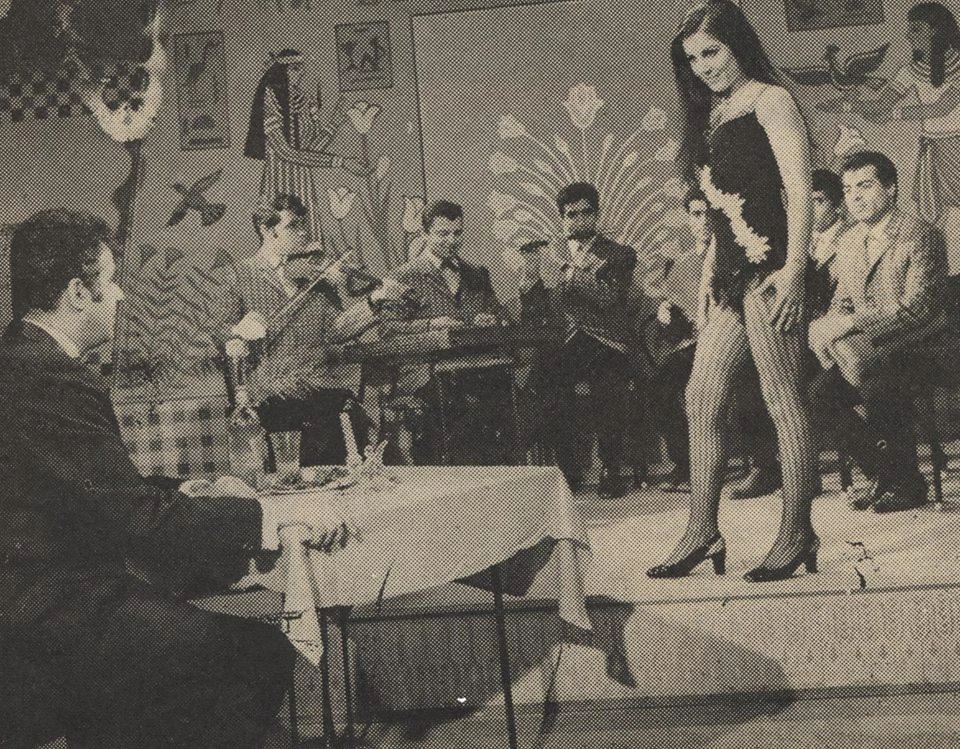
Ebrahim Golestan. I was with him until the last days of his life. He was the father of the Iranian New wave. The one single thing he kept talking about was Mossadegh25. It had completely changed his life. He was haunted until he died at the age of 101, having these images in his mind. And of course, the voice that is put on it is put by the English newsreel. So he had just shot the footage, had given it to these people, and they had put, oh, „what a performance”. They've made a mockery out of him26. He knew Mossadegh before, when he was still in power and he was the prime minister. Golestan never recovered from that trial of Mossadegh.
Moving beyond the era of Mossadegh, I'd like to look toward the future. We have this scenario - the current government will fall, giving way to a „new Iran.” Would you go there to screen your films and discuss cinema from the eras of both the Shah and the Islamic Republic?
I'll go there to offer my help and support for the reconstruction of the country. And since I can offer only what I am an expert of, I think I will help to modernize, to revive the Iranian film archive. I would be happy to offer my services for free for the country. I would never go back to Iran to live there. You know, I have my life outside Iran. But I would be very happy to offer my services for free to make sure that the Iranian film heritage, pre and post-revolutionary, is taken care of. I'm in favor of preserving everything, every bit of the shittiest films made now and everything that was produced before the revolution. Good and bad. Everything needs to be preserved for the future so people can look and see how it was. So that's my task. I will go there to help, like an architect.
You already do this. You preserve the past for future generations.
I'm already doing it outside Iran, but I would be very happy to go and do it systematically and take other people with me to help. You can train people in Iran to take care.
To screen Gav27 again.
That footage is from a long, long time. Now it's okay. Now they have given up on cinema. Cinema is not a problem. They have much bigger problems. Cinema is no longer a threat to the regime in Iran, because they have so many other subversive threats from within, that they don't have time to deal with cinema or arts.
The movies, filmmakers and events mentioned in the interview:
- Filmfarsi is a term coined by critic Hushang Kavusi for a genre of popular, low-budget Iranian cinema from the 1950s to the 1970s. Characterized by melodramatic plots, dance, and music heavily inspired by Bollywood, these films were immensely popular despite critical disdain before being suppressed after the 1979 Revolution. "Filmfarsi" is also a 2019 essay-film about this Iranian pre-revolutionary popular cinema directed by Ehsan Khoshbakht.
- Mohammad Rasoulof (born 1972), is an Iranian independent filmmaker currently living in exile in Europe. Known for his uncompromising critiques of the Iranian government, he has faced years of censorship, arrests, and travel bans.
- Farsi or Persian (فارسی) is a major Indo-Iranian language spoken by over 100 million people worldwide, primarily in Iran (as Farsi), Afghanistan (as Dari), and Tajikistan (as Tajiki). It is an Indo-European language, not Semitic like Arabic, though it uses a modified Arabic alphabet. It is known for its rich literary tradition and is the official language of Iran.
- The Parsis are an ethnoreligious group of Persian descent who migrated to India around the 10th century to escape religious persecution following the Arab conquest of Iran. Adherents of Zoroastrianism, they are a small, highly urbanized community centered in Mumbai, known for their distinct culture, fire temples, and significant historical role in Indian trade and industry.
- Abdolhossein Sepanta (1907–1969) was an Iranian filmmaker, screenwriter, and poet widely regarded as the "father of Iranian sound cinema". A dedicated scholar of ancient Persian literature and history, he sought to create a cinematic identity for Iran that was deeply rooted in its national heritage.
- Ardeshir Irani (1886-1969) was an Indian filmmaler who teamed up with Abdolhossein Sepanta in India in 1933 to produce Lor Girl (Dokhtar-e-Lor), the first Persian-language sound film. Produced by Irani's Imperial Movietone, this collaboration combined Iranian cultural themes with Indian technical expertise, marking a significant milestone in early Iranian cinema.
- Sadegh Hedayat’s "The Blind Owl" is widely hailed as the foundational masterpiece of modern Persian fiction, famously described as a haunting, surrealist descent into madness and isolation, firstly published in Bombay, India in 1936.
- Dr. Esmail Koushan (1917–1981) was a very important figure in Iranian cinema, widely regarded as the "father of the Iranian film industry". He founded Pars Film Studio in 1948 which became the largest and most professional film studio in Iran at the time.
- The Iranian New Wave (c. 1964–1979) was a transformative artistic movement, reacting against formulaic "Filmfarsi" by introducing poetic neorealism, social commentary, and documentary-style, low-budget filmmaking to Iran. Led by directors like Dariush Mehrjui, Abbas Kiarostami, and Amir Naderi, it focused on daily life, existentialism, and political subversion before the 1979 revolution.
- Kamran Shirdel (b.1939) is a pioneering figure of the Iranian New Wave and is widely considered the "father of social and critical documentary" in Iran.
- Dariush Mehrjui (1939–2023) was the founding father of the Iranian New Wave movement. He is best known for his 1969 film "The Cow", which is widely credited with launching the modern era of Iranian filmmaking.
- Sohrab Shahid-Saless (1944–1998) was an influential Iranian film director and an important figure of the Iranian New Wave. He is celebrated for his minimalist, poetic realism and his portrayal of social alienation
- Arby Ovanessian (b. 1942) is a renowned figure in Iranian avant-garde culture, bridging the worlds of theater and cinema. As an Iranian-Armenian director, his work is defined by a meditative, poetic style that often explores the intersection of Eastern and Western traditions.
- The Cherikha-ye Fadayi-e Khalq-e Iran (Iranian People's Fedai Guerrillas - IPFG) refers to a militant Marxist-Leninist, anti-imperialist movement that emerged in Iran in the early 1970s to fight against the Shah's regime. The movement, often referred to simply as Fedaian (meaning "self-sacrificers" or "devoted ones"), was a significant, albeit split, leftist force that transitioned from armed struggle to political opposition in exile following the 1979 Iranian Revolution
- Ayatollah Ruhollah Khomeini (1902–1989) was the founder and first Supreme Leader of the Islamic Republic of Iran. He was the central figure of the 1979 Islamic Revolution that overthrew the Pahlavi dynasty.
- A chador is a traditional full-body-length, semicircular cloak worn by many women in Iran. The garment is draped over the head and covers the body down to the ankles, leaving the face exposed.
- Shahadat (martyrdom) in Islam represents the supreme sacrifice of one’s life while witnessing for faith, fighting for a just cause, or dying in certain innocent, accidental, or natural ways. Regarded as a highly honored, exalted rank, martyrs (shaheed) are considered alive in the presence of God.
- Imam Ali ibn Abi Talib (c. 600–661 CE) is a central figure in Islam, revered as the first Imam by Shia Muslims and the fourth "Rightly Guided" Caliph by Sunni Muslims. He was the cousin and son-in-law of the Prophet Muhammad and is celebrated for his profound wisdom, unmatched bravery, and commitment to social justice.
- Mohammad-Ali Fardin (1931–2000) was a renowned Iranian freestyle wrestler and superstar actor known as the "King of Hearts". He won a silver medal at the 1954 World Wrestling Championships before becoming the biggest box office draw in Iranian cinema from the 1960s to the late 1970s, often portraying chivalrous, working-class heroes.
- "Fereydun-e Binava" was the localized Iranian title for the French film "Les Misérables" (specifically the 1934 version or a similar adaptation).
- Farrokh Ghaffari (1922–2006) was a central figure in Iranian cinema, recognized as a pioneer of the Iranian New Wave movement alongside figures like Ebrahim Golestan and Fereydoun Rahnema.
- Ebrahim Golestan (1922–2023) was a foundational figure in Iranian culture, renowned as a pioneering filmmaker, acclaimed writer, and influential intellectual. He is widely credited with helping launch the Iranian New Wave through his innovative studio and avant-garde techniques.
- Forugh Farrokhzad (1934–1967), one of Iran's most influential modernist poets and a pioneering female filmmaker. She is celebrated as a cultural icon for her raw, honest exploration of female desire and her rebellion against traditional social restrictions.
- Nosrat Karimi (1924–2019) was an Iranian actor, director, sculptor, and puppet master whose career spanned over six decades.
- Mohammad Mossadegh (1882–1967) was the first democratically elected Prime Minister of Iran, removed from power on August 19, 1953, in a coup d'état orchestrated by the United States and the United Kingdom. This operation, known as Operation Ajax, successfully restored and consolidated the power of Mohammad Reza Pahlavi, the Shah of Iran.
- In Filmfarsi, Ehsan Khioshbakht marks the 1953 ousting of Mohammad Mossadegh as "the beginning of the end for the dream of a new Iran". The film includes archival British Movietone newsreel footage, captured by Ebrahim Golestan, that features a commentator ridiculing Mossadegh for "pretending" to be ill during his trial. This trial, conducted by a military tribunal, charged the Prime Minister with treason after the US-UK orchestrated coup.
- The Cow (Gāv), released in 1969 and directed by Dariush Mehrjui, is a landmark of the Iranian New Wave known for its philosophical depth and neorealism. In an episode recounted in his film Celluloid Underground, Ehsan Khoshbakht describes screening the film in his hometown, where he was shouted down by fundamentalists while secret police watched. This hostility was due to the screenplay being written by Gholam-Hossein Sa'edi, a prominent leftist viewed as a Marxist by the Islamic Republic.