The intimacy coordinator profession was born out of the #MeToo movement and has become essential on film sets, to make sure actors feel emotionally safe. Vlad Troncea, a Romanian actor and dancer with experience both in London and in Romania, talks about his work — which, despite some stereotypes, is not about being the “sex police”.
In October 2017, after a New York Times investigation revealed how film producer Harvey Weinstein paid for the silence of the people he had sexually abused, Hollywood and the US celebrity world began to shake. Hundreds of stories about abuse and sexual harassment came out through the #MeToo movement, which then spread worldwide.
Because so many victims spoke up and famous abusers were exposed, a new role appeared on film sets around the world: the intimacy coordinator. The job of these professionals is to make sure — through conversations before filming — that no one feels uncomfortable in intimate scenes, that no touch causes negative reactions, and that everyone’s boundaries are respected. But the job also has an important creative side.
Romanian actor and dancer Vlad Troncea works as an intimacy coordinator in London, and this year he worked for the first time on a Romanian production as well.
Vlad grew up in the Rahova neighbourhood in Bucharest and left for London in 2018. He didn’t plan to move abroad. He was on a one-week holiday when a colleague from Romania convinced him to go to a casting there. To his surprise, he got a leading role in a theatre show. That’s when he decided to stay.
Today, he has over ten years of experience in acting, dance, and intimacy coordination, both in Romania and the UK. The first time he really understood the need for intimacy coordinators was in 2019, when he acted in the series Brave New World — a modern adaptation of Aldous Huxley’s 1932 novel. The series keeps the main ideas of a dystopian society where emotions are controlled by technology, but the characters and events are expanded for a 21st-century audience.
In the series, Vlad took part in a simulated orgy scene that also included dance movement. “There were over 40 dancer-performers, and we had two intimacy coordinators.” He was impressed by the potential of the job and decided to train in this field. Finding courses wasn’t easy, especially because of COVID-19, but he didn’t give up and was accepted at the UK’s prestigious National Film and Television School (NFTS).
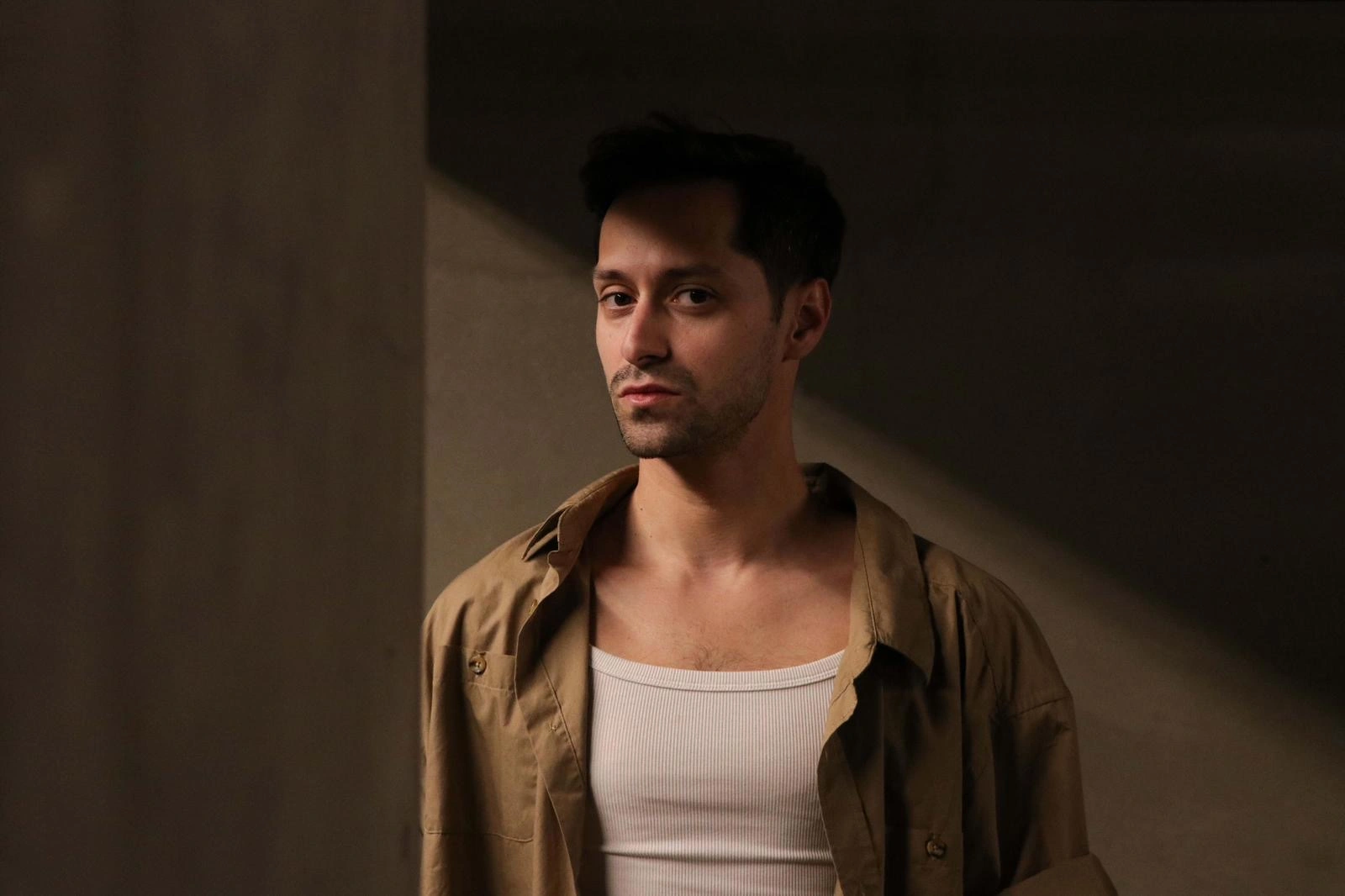
Vlad is a modest guy. He’s still excited that he’s been working with the Royal Opera House in London since 2019. Last summer, he worked there as a dancer in Faust, and he’s set to work on La Traviata next.
We spoke with him about what his job as an intimacy coordinator involves and why this role is so important behind the camera.
Scena9: What was the NFTS course like? Who were your teachers and what did you learn?
Vlad Troncea: It lasted about eight months and was a mix of in-person and online training. We had a main mentor whose vision was to expose us to people already working in the industry, each with different styles and processes, so we’d have a very varied experience. For example, one person taught choreography, another taught consent.
Structurally, there were many things we had to cover because they’re mandatory in the industry. For example, we needed several certifications. One was mental health first aid — that was a course in itself. We also had to learn about unconscious bias, equality, diversity, LGBTQ+ issues, and how to work with children in the entertainment industry. There’s a strong theoretical side, and you need those certificates later as a professional.
On the practical side, we worked a lot on choreographing intimate moments, how you talk to actors, how you explore boundaries and consent. What are an actor’s limits? What are their restrictions? We did lots of role-play, including conversations you might have with a director when starting a project and trying to understand their vision.
We also worked a lot on masking techniques — how to choreograph actors so that, on camera, things look very real. We had modules on what we call “modesty garments”: very technical pieces of underwear used in nude scenes to cover certain body parts while leaving others visible. They’re mainly used to cover genitals, but maybe you still need to see the side of a hip, or an actor’s backside. The idea is not to leave actors naked on set, especially in simulated sex scenes.
At the end, we had an exam where each of us chose an intimacy scene. We were given actors, a director, and cameras. We had to do the whole process from start to finish in front of a panel, who watched how we worked with actors, how we spoke to them, how we choreographed the scene, and how we related to the director.
Before Brave New World, were there moments in your acting career when you might have needed intimacy coordination?
No, because I hadn’t done intimate scenes before. Brave New World was the first time. After that — before I did the intimacy course — I worked on Mary & George, a series with quite explicit intimate scenes involving nudity. There too, we had an intimacy coordinator.
What’s the hardest part of this job? I imagine some actors find it hard to name their boundaries — maybe they’re young or afraid of losing the role.
That was exactly one of the problems before intimacy coordinators existed: power dynamics where actors didn’t feel comfortable talking to someone in production or to a big director about their limits. That’s why these conversations happen one-on-one, privately, between the intimacy coordinator and each actor.
The hope is that by creating a safe space, actors feel comfortable being honest, without risking losing their job or role because of their boundaries. Consent is something ongoing — I make that very clear from the start. It’s fluid. It can change. People can change their minds.
For example: you talk with actors about an intimate scene, but they’ve never met before. On set, you realise that even though you discussed certain things, the energy is different once they actually meet. Things they thought would be fine suddenly aren’t. We had to explore again what felt comfortable and what didn’t. We took a break, did some workshops to break the ice and create some connection — as much as possible in a very short time. A film set is a fast, pressured environment.
So we had to find solutions that still served the story and the director’s vision, but in a different way — so both actors felt comfortable and stayed within their limits.
When you watch older films now, can you tell when there was no intimacy coordinator?
Yes, sometimes. I think that if one had existed, things might have looked different. That said, there are still scenes that work very well even without one. But an intimacy coordinator never makes things worse.
Even in the UK, where things are fairly clear, it’s still important to talk about what an intimacy coordinator is not. There’s still this idea that we limit directors, that we’re the “sex police”, someone who pulls a director aside and says, “you’re not allowed to do this”. That’s not true. We’re creative professionals who help complete a director’s vision — not block it or question it.
Of course, if a director asks for your opinion, you can offer it without taking over their role. Or you might work with a director who has a very clear vision and says, “This is how I want it.” That’s not something you’re there to challenge.
But sometimes a director says, “I want a spicy scene, a simulated sex scene, but I don’t know exactly how — positions, movement.” That’s when you can bring in much more creativity. These things have to be clearly agreed from the start and depend a lot on the dynamic between the intimacy coordinator and the director.
After #MeToo, the focus was very much on safety and emotional comfort. For a while, people saw the role mainly as someone there to prevent abuse or harassment.
In recent years, it’s become clearer that an intimacy coordinator is also a creative professional who builds the movement around these scenes. It’s often compared to a stunt coordinator: someone who choreographs a fight so actors are safe and it still looks real. There are differences, of course, but the idea is the same — it’s not just about safety.
What’s been the most challenging thing for you so far?
Working with many people who had no connection at all to this field. That comes with a huge responsibility, no matter how explicit the scene is. Being someone’s first contact with this job — whether actors or even directors — brings a lot of pressure and a sense that you’re also representing and defending the profession.
Does the job have a slightly therapeutic side?
I think it can be very comforting for actors to know their voice matters. Just knowing there’s someone you can go to and say, “I’m not comfortable with this.” That wasn’t always common before. People didn’t know who to talk to — the director? On set, in front of everyone, while everyone’s rushing? The context was wrong, and the power dynamics were there.
It’s important that there’s someone whose only job is this, who creates a space where you can be honest. At the same time, during training we were told very clearly not to slip into being therapists. Some actors, wanting to be heard, might start sharing very personal, intimate experiences — and that should never become our focus.
For example, imagine you’re filming a r*pe scene. That kind of content can be very triggering. Actors might start sharing personal experiences from their past. It takes a lot of diplomacy to stop that and not turn this job into therapy. That’s a clear no — even if people feel safe talking to you.
Or if we’re filming an intimate scene between two men: I would never ask questions about their sexuality or personal experiences. What I can ask is whether they’ve worked with an intimacy coordinator before, or done similar scenes. Anyone, regardless of gender, can feel uncomfortable on set.
How was your experience as an intimacy coordinator in Romania?
I worked on an independent short film with quite a lot of intimate content. I felt an incredible openness from the director, the producers, and the actors — especially because it was their first time working with an intimacy coordinator. It was a wonderful experience. The curiosity and openness were amazing.
It was my first experience working in Romania. As far as I know, it might have been the first time a Romanian intimacy coordinator worked in Romania. That was actually my long-term plan: to train in the UK, at these standards, and then bring this practice to the Romanian industry, wherever there’s openness and need.
How do you split your time now? Are you only an intimacy coordinator, or do you also act and dance?
It’s not a full-time job yet, and I don’t know if it will be soon. For now, I alternate between performing and intimacy coordination. I wouldn’t mind doing more intimacy coordination in the future and having more consistency, but at the moment that’s not the case. And in the industry, it’s not very common to do only this — many colleagues still combine it with their previous jobs.
The London market might be getting a bit saturated. There was a big boom after #MeToo, especially around 2019 and during the pandemic, when some well-known names in film and TV covered much of the market.
At first, intimacy coordinators were only used in big films and series. Now awareness has spread — to theatre, low-budget productions, reality TV, ads, music videos. There’s more work, but it’s also about contacts, networking, and competition.
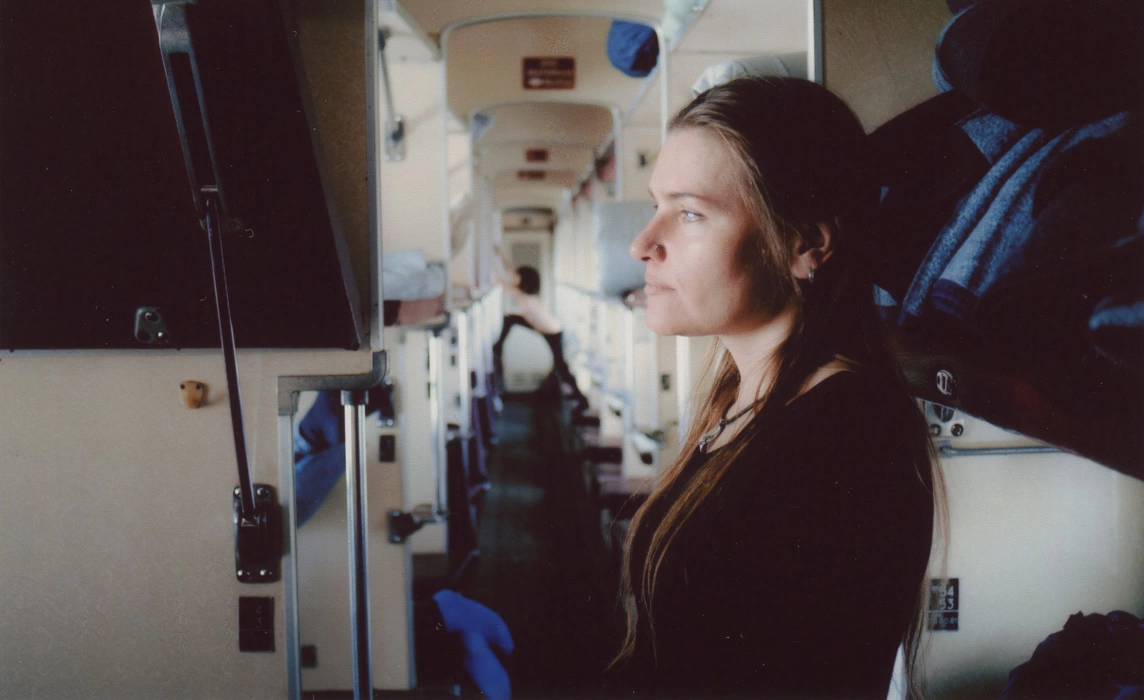
Photos from Vlad Troncea’s personal archive